
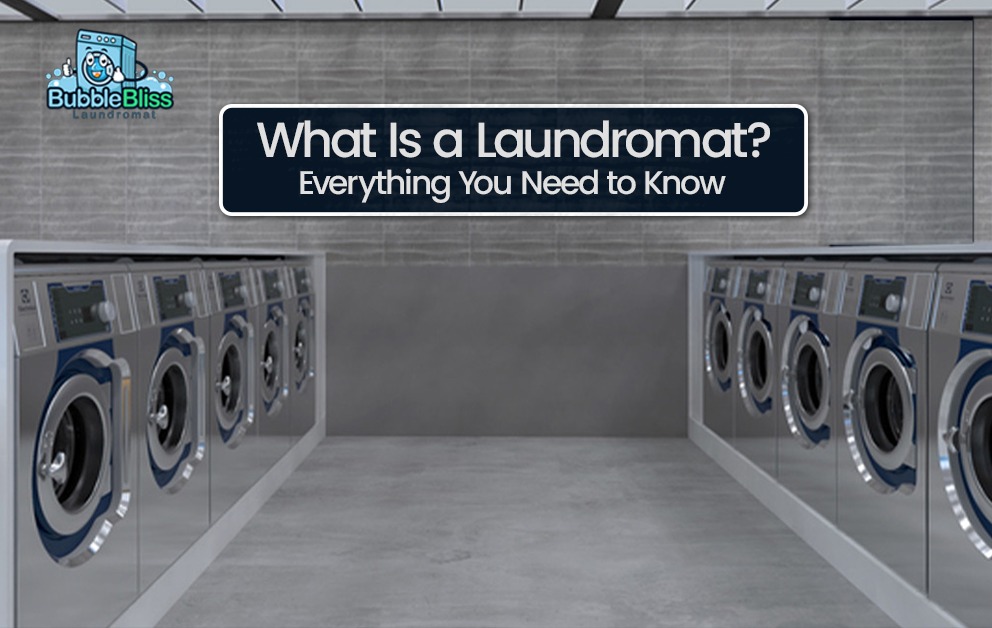
What Is a Laundromat?
A laundromat is a public facility for cleaning clothing. These establishments offer self-service laundry options alongside full-service garment care. Customers frequently refer to this business model as a coin laundry. Consequently, NYC apartment laundry presents specific logistical challenges. Urban residents often lack sufficient space for personal washing machines. This physical limitation creates a high demand for convenience. Laundromats resolve this specific urban problem.
How Does a Laundromat Work?
A laundromat operates through a strict five-step process.
- Step 1: Bring Clothes. Customers transport soiled garments to the facility.
- Step 2: Load Machines. Patrons place items into commercial washing machines. Garments require adequate room for free movement. Users must leave empty space at the top of the drum. Furthermore, this space must equal the size of a standard football. Overloading causes poor washing results.
- Step 3: Pay. Users submit payment to activate the equipment. Many 2026 NYC laundromats utilize digital payment methods. Facilities frequently require proprietary laundry cards. Some locations mandate mobile applications. Common digital platforms include Speed Queen Insights, Airwallet, or PayRange. However, New York City enforces specific consumer protection laws regarding these payments. NYC Code §20-840 regulates these financial transactions. Establishments must accept cash without adding surcharges. Facilities may alternatively provide no-fee cash-to-card smart-payment kiosks.
- Step 4: Wash Then Dry. The machine executes the wash cycle. A standard wash cycle requires 30 to 45 minutes to complete. Subsequently, customers transfer wet garments to a commercial dryer. The drying process requires an additional 30 to 45 minutes.
- Step 5: Fold. Patrons remove dry clothing from the machines. Customers fold their garments on designated tables.
Types of Laundromats
Consumers utilize two primary types of laundromats.
Self-Service Laundromats
Self-service laundromats require customers to perform DIY washing. Patrons load the commercial machines manually. Users execute payment through established facility protocols. Many legacy locations operate as a traditional coin laundry. In contrast, modern laundry facilities frequently utilize digital card systems instead of physical currency.
Full-Service Laundromats
Full-service laundromats employ dedicated staff members. These employees handle all garment processing. Customers deliver dirty garments to the facility counter. The industry classifies this specific model as drop-off laundry. Service providers frequently advertise these operations as wash and fold. Certain facilities utilize the alternative terminology fluff-and-fold.
How Much Does It Cost to Use a Laundromat in NYC?
NYC laundry costs depend on the chosen service model.
| Service Model | Price Range / Average Cost | Additional Fees |
| Self-Service Washing | USD 3.00 to USD 7.00 per load | None |
| Self-Service Drying | USD 2.00 to USD 5.00 per load | None |
| Wash and Fold | USD 50.00 average | Includes standard USD 9.95 Pickup & Delivery Fee |
What to Expect When Visiting a Laundromat
A standard visit requires 1 to 1.5 hours. This timeframe applies to customers performing self-service laundry. Modern facilities provide specific industrial equipment. Patrons utilize commercial top-load washers for standard garments. Advanced locations feature high-capacity extractors. These extractors operate at up to 200 G-force. This extraction power removes excess water rapidly. Customers then transfer damp garments to multi-load dryers. Finally, patrons execute machine payments using dedicated smart-card kiosks.
How to Find a Laundromat Near You
Consumers frequently search for a “laundromat near me” using digital maps. Location-based applications display nearby public washing centers. Many urban residents require flexible laundry schedules. Operators frequently solve this problem by opening a 24-hour facility. These continuous operations accommodate non-traditional working hours. Unrestricted access prevents machine scarcity during peak daytime periods.
Laundromat vs Home Laundry: Which Is Better?
Home laundry vs laundromat comparisons highlight distinct financial differences. NYC apartment laundry constraints frequently eliminate at-home washing options. A home laundry load costs between USD 1.00 and USD 3.00 on average. Conversely, an average weekly laundromat trip requires USD 10.00 to USD 25.00.
Modern Laundromat Services
Modern laundromats provide advanced digital and eco-friendly services. Facilities utilize app-based tracking. This tracking provides real-time cycle notifications. Operators install Bluetooth payment gateways. PayRange represents a standard Bluetooth payment gateway. These digital gateways enable contactless smartphone transactions. Furthermore, advanced facilities feature eco-friendly ozone washing. Certain locations utilize specific San-O3-Wash systems. The equipment injects ozone gas directly into cold water. This low-energy method reduces human chemical exposure. The ozone process produces a deep clean without chemical residue.
Why Choose a Full-Service Laundromat Instead of DIY
Consumers choose full-service laundromats to reclaim personal time. Customers outsource laundry to avoid manual garment washing. Full-service facilities eliminate manual garment drying. These businesses also eliminate manual garment folding. Delegating this weekly chore saves significant time. Outsourcing laundry saves the average NYC resident over 8 hours per month. Dedicated professionals handle the entire cleaning process. Consequently, customers avoid spending weekends inside public washing facilities.
Laundromat Services in NYC
Bubble Bliss operates specific laundromat services NYC residents utilize. Bubble Bliss manages laundry pickup and delivery NYC logistics. These logistical operations resolve physical space limitations inside urban apartments. Dedicated staff members process all client garments. This centralized processing eliminates manual washing requirements. “A seamless user experience enables transparency and efficiency, creating high levels of satisfaction and turning one-time customers into loyal regulars”. Bubble Bliss executes these specific cleaning protocols. This operational methodology maximizes convenience and prevents premature fabric degradation.
FAQ Section
How long does a laundromat take?
- Wash cycles require 30 to 45 minutes to complete.
- Drying cycles require an additional 30 to 45 minutes.
- A complete visit requires approximately 1 to 1.5 hours.
Do laundromats provide detergent?
- Customers must generally bring personal detergent.
- Patrons may also purchase detergent on-site.
- Some modern facilities offer internal dosing systems.
- These automated systems inject chemicals directly into the wash cycle.
Are laundromats safe?
- Laundromats implement specific security measures.
- Well-lit facilities deter criminals.
- Many modern locations remove physical cash entirely from the floor.
- This cashless model provides added safety for patrons.
Can I leave my clothes unattended?
- Patrons may leave clothes for short errands.
- Users must return promptly.
- Machine hoarding violates basic laundromat etiquette.
- Community standards permit moving unattended laundry.
- Another user may move your laundry 5 to 15 minutes after a cycle finishes.
What is Wash and Fold?
- Wash and fold represents a full-service laundry option.
- Dedicated experts handle garment washing, drying, and folding in-house.
Do I tip for laundry delivery?
- Tipping a delivery driver is not mandatory.
- Tipping remains a strictly optional practice.
- Customers frequently offer a gratuity to show appreciation.
Can I get a refund on a laundry card?
- Customers can usually receive a laundry card refund for machine malfunctions.
- Management typically issues these refunds as store credit.
- Customer errors invalidate refund requests.
- Adding bleach incorrectly constitutes a non-refundable customer error.
What is Ozone Laundry?
- Ozone laundry utilizes advanced sanitation technology.
- Ozone systems inject ozone gas directly into cold water.
- This gas rapidly sanitizes garments.
- The process lifts soil from fabrics efficiently.
- The ozone converts back to pure oxygen after the wash cycle.