
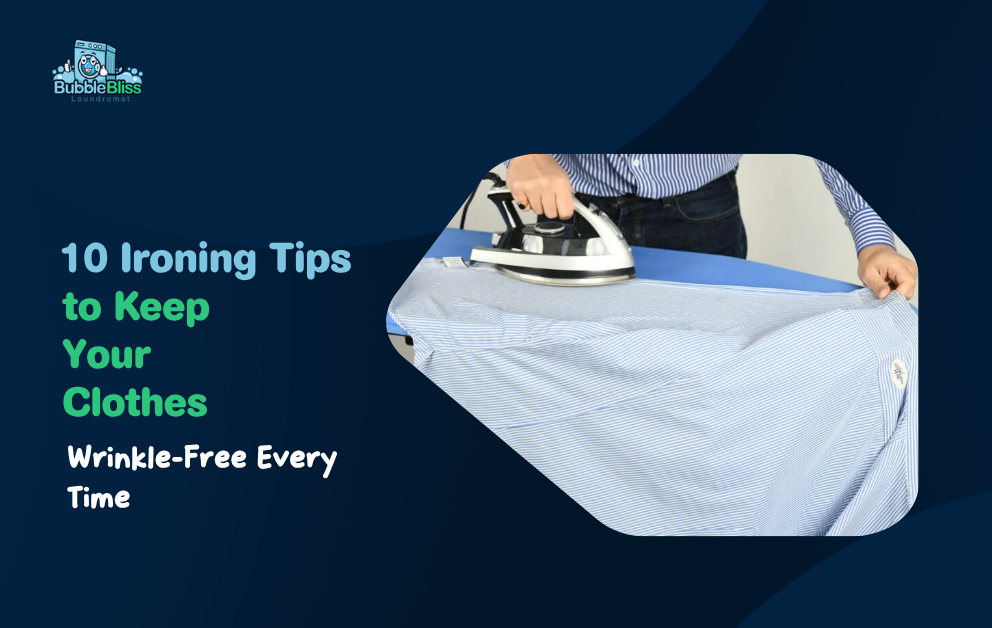
Maintaining a pristine, sharp wardrobe requires a precise blend of physics and proper technique. While a clean press instantly elevates your personal style, standard home ironing routines often introduce hidden utility costs, mineral scaling risks, and time constraints that disrupt your weekend schedule. By mastering specific fabric temperature thresholds, aerodynamic workflows, and strategic post-press hanging methods, you can systematically protect your clothing investment and eliminate stubborn creases with minimal effort. How to do that? Well, there are a few Ironing Tips to Keep Your Clothes Wrinkle-Free!
Here in this article we will dive deep into 10 ironing tips to keep your clothes wrinkle free.
1. Calibrate Your Temperature Profile by Fiber Identity
This is one of the primary ironing tips to keep your clothes wrinkle free. Executing high-efficiency garment care requires matching the appliance thermal profile to specific material thresholds. Selecting incorrect heat configurations introduces permanent fiber deformation.
- Linen: This material demands maximum structural thermal thresholds calibrated between 440°F and 460°F. High heat overcomes rigid natural cellulose compressions.
- Cotton: Pure cotton layers require a stable baseline heat setting running at approximately 400°F.
- Synthetic Polyesters: Artificial thermoplastic polymers must be pressed strictly between 250°F and 275°F. Low heat parameters completely eliminate surface melting risks.
2. Maintain an Uncompromised Clean Surface Fluid Line
Utilizing local municipal water infrastructure directly within steam chambers introduces long-term scale risks.
- The NYC Tap Paradox: The New York City Department of Environmental Protection (DEP) 2024 Drinking Water Supply and Quality Report documents municipal mineral baselines. The verified range for NYC water hardness is 16–47 mg/L. The Catskill/Delaware reservoir system delivers a specific average hardness of 24 mg/L. The Croton watershed delivers a specific average hardness of 44 mg/L. Continuous boiling inside closed home appliances causes these trace minerals to precipitate out of the liquid solution over time.
- Strategic Command: Users must enforce the exclusive application of distilled water within the iron reservoir. Pure water isolates the steam chamber from mineral scaling. Proper fluid selection clears standard vent blockages. Eliminating mineral scaling prevents orange iron rust streaks from staining fine white garments.
3. Deploy Moisture Dynamics Early (The Damp Ironing Hack)
Optimizing the kinetic interaction between structural fibers and heat requires processing textiles during specific hydration windows. Garments should be ironed when they maintain exactly 10% to 15% residual moisture content. This moisture level occurs straight from outdoor line drying. This target window can be reached via an abbreviated, low-heat mechanical dryer cycle. Pressing damp textiles yields immediate structural crispness. Embedded water molecules lower the overall thermal energy needed to cause molecular bond relaxation.
4. Master the Sequence Matrix (Small to Large Geometry)
Maintaining uncompromised flatness during an active press session relies on a strict geometric layout progression. Garments must be processed using a non-negotiable small-to-large architectural workflow path. Assemble the unbuttoned collar zones first. Clear the sleeve cuffs second. Flatten the sleeves third. Shape the shoulder yokes fourth. Finalize the expansive front and back main body panels last. This spatial ordering prevents completed zones from re-creasing during subsequent panel passes. This is one of the most effective ironing tips to keep your clothes wrinkle free.
5. Leverage Gravitational Hanging Suspension Post-Press
The absolute stability of a pressed garment is determined during the volatile cooling phase immediately following thermal contact. Freshly pressed fabrics remain highly hydroplasticized after heat exposure ceases. Garments are structurally vulnerable to deformation for 5 to 10 minutes during the cooling cycle. Wardrobes must be hung immediately upon wide, contoured wooden structures or sturdy padded hangers. Immediate hanging allows the ambient room breeze to permanently set the smooth fiber profile before closet storage.
6. Harness the Power of Advanced Surfactant Engineering
The commercial consumer market experiences an accelerating shift toward advanced chemical solutions for garment preservation. Data from the provided market files confirms that specialized wrinkle release sprays are projected to reach an overall market valuation of USD 3.4 Billion by 2036. These chemical formulations utilize specialized agents to relax internal surface fiber friction. Incorporating these agents provides a legitimate companion strategy alongside traditional hot soleplates for executing rapid touch-ups on minor traveling creases.
7. Optimize Home Utility Infrastructure Costs
Operating consumer-grade thermal pressing equipment places a significant burden on residential electrical grids.
- The Utility Reality: A typical household steam iron draws an intense load of 1200 watts. Verified utility metrics confirm that the ConEd 2026 residential baseline rate is 26.87¢/kWh ($0.2687/kWh). Running this appliance daily for 30 minutes consumes exactly 0.60 kWh per day ($1200 \text{ W} \times 0.5 \text{ hours} = 600 \text{ Wh} = 0.60 \text{ kWh}$). At this baseline rate, the active daily cost is 16.122¢. Over a standard 30-day month, this routine creates an active, cumulative utility cost of $4.84. Conducting extended, multi-hour home ironing sessions creates an expensive, hidden surge on the monthly household utility bill. Homeowners must batch items together to limit active utility drain.
8. Protect Delicate Silk and Wool via Barrier Cloths
High-temperature treatment of luxury animal proteins can cause permanent fabric glaze. Direct thermal contact creates surface scorch markings. Intense heat leaves permanent fiber shine on dark garments. Home operators must place a clean, damp white cotton towel over the fabric surface. A specialized mesh pressing cloth can be substituted as a protective shield. This intermediate barrier safely diffuses the direct soleplate thermal profile across delicate animal fibers.
9. Maximize Board Aerodynamics and Air Cushioning
Premium fabric finishing depends on the aerodynamic properties of the underlying pressing substrate. Modern active ironing boards feature integrated vacuum suction mechanisms. Active boards can utilize upward-directed airflow fans. Drawing pressurized steam downward through the garment fibers extracts residual moisture instantly. Rapid moisture extraction cools the substrate quickly. Accelerated cooling produces exceptionally crisp lines that stand up to humid urban environments.
10. The Ultimate 7-Step Dress Shirt Execution Protocol
There are certain steps to follow when it comes to Ironing Tips to Keep Your Clothes Wrinkle-Free.
Standardized dress shirt pressing requires a systemic chronological sequence:
- Step 1: Press the collar underside starting from the outer tips and moving straight toward the center line.
- Step 2: Flatten the collar exterior facing panel using firm, localized downward pressure.
- Step 3: Unbutton the cuffs completely and press them flat from the interior linings outward to the edges.
- Step 4: Smooth the sleeves flat on the board surface, pressing from the shoulder seam down to the cuff opening line.
- Step 5: Maneuver the shoulder yoke directly over the narrow nose contour of the ironing board.
- Step 6: Work the main front button panels carefully between individual fasteners to protect the threads.
- Step 7: Clear the main expansive back panel using wide, continuous horizontal strokes.
The Ultimate Escape: The True Economics of Premium Garment Outsourcing
The Macro Market Shift
The macroeconomic landscape shows a clear shift toward professional convenience as urban consumers choose time-saving solutions. Market research documents this expanding commercial ecosystem dedicated to structural garment maintenance. The global dry-cleaning and laundry services market size was valued at a verified baseline of USD 69.3 billion in 2022. This industry is expected to climb to a total valuation of USD 140.1 billion by 2030. This structural trajectory highlights an increasing demand for premium outsourced solutions over resource-intensive home care routines.
The Local NYC Value Theorem
Evaluating the true cost of home garment care reveals an invisible financial drag on urban professionals. Purchasing a calibrated iron and board requires a capital outlay of $80 to $300 upfront. Operating home appliances introduces active water and electricity fees. A standard washing machine cycle consumes $0.42 in utility costs. A residential dryer adds another $0.61 in utility fees per load. Maintenance supplies add $0.20 to $0.60 per load for detergent and fabric softeners.
[Invisible Home Costs: Capital Outlay ($80-$300) + Utility Fee Per Load ($1.03) + Supplies]
│
▼
[Optimized Solution: Bubble Bliss Premium Valet Subscription via On-Demand App Integration]
Comparing these operational fees against premium local service models shows a distinct time-saving advantage. Premium wash and fold services in New York City range from $1.50 to $5.00 per pound depending on the specialized labor involved. Transitioning your wardrobe maintenance to Bubble Bliss Laundromat NYC eliminates the risk of human error, preserves fabric longevity, and returns pristine free hours to busy professionals.
Section 3: Strategic Verification & Local Value Tables
Table 1: Key Fabric Care & Calibration Matrix
The following matrix outlines the necessary operational calibrations based on fabric classification:
| Fabric Classification | Optimal Thermal Threshold | Required Steam Output | Strategic Ironing Protocol |
| Linen | 440°F – 460°F | Maximum / Continuous | Iron damp; press both sides to break rigid creases. |
| Cotton (100%) | 400°F | High / On-Demand | Stretch taut on the board; use firm, steady downward strokes. |
| Wool & Cashmere | 300°F | Medium / Hovering Steam | Use damp pressing cloth barrier; avoid direct soleplate contact. |
| Silk | 275°F | Zero / Dry Setting | Turn inside out; press dry to eliminate water spotting risks. |
| Polyester/Synthetics | 250°F – 275°F | Minimal Burst Only | Keep iron in continuous rapid motion; avoid localized melting. |
Table 2: Comparative DIY Prep Timeline vs. Professional Efficiency
This table evaluates the operational time allocations and risk metrics of home care against professional alternatives:
| Apparel Item Type | Avg. DIY Time (Mins) | Risk Level (Scorch/Shine) | Optimized Alternative Strategy |
| Formal Dress Shirt | 8 – 12 Mins | Moderate | Bubble Bliss Professional Pressing Line |
| Suit Pants/Pleats | 10 – 15 Mins | High | Targeted Eco-Solvent Crease Realignment |
| Linen Jumpsuit | 12 – 18 Mins | High | Moisture-Controlled Tension Pressing |
| Standard Cotton Tees | 3 – 5 Mins | Low | Hanger Suspension & Structural Valet Fold |
Table 3: Financial & Operational Cost Analysis (NYC Professional Context)
A direct resource comparison shows the operational differences between home care and professional valet systems:
| Expense Category | DIY Home Pressing & Care Routine | Bubble Bliss Premium Valet Service |
| Capital Outlay | $80 – $300 upfront (Calibrated iron + board) | $0.00 Out-of-Pocket Expense |
| Utility Drain | 26.87¢/kWh effective iron rate baseline ($4.84/mo) | Included inside standard service parameters |
| Weekly Time Investment | 2.5 – 4.0 Hours of active physical labor | Under 5 Minutes via secure on-demand app |
| Quality Architecture | Variable performance (Risk of human error) | Enterprise-Grade Crispness & Crisp Finishing |
| Garment Longevity | Accelerates fiber stress via heat mistakes | Calibrated, life-extending textile restoration |
Frequently Asked Question (FAQs)
Q1: Is NYC tap water safe to use inside a premium steam iron?
A1: While 2026 municipal water data confirms NYC tap water is soft at 52 mg/L, persistent heat causes trace carbonate minerals to precipitate. Over time, this forms scale buildup inside internal vents. Using distilled water isolates the appliance from scaling and completely prevents rust streaks on fine clothes.
Q2: Why do clothes wrinkle again immediately after they have been ironed?
A2: Post-press wrinkling happens when clothes are folded or worn before the fabric completely cools. Heated fibers remain in a flexible, hydroplastic state for 5 to 10 minutes. Hanging items immediately on contoured wood structures sets the smooth shape securely.
Q3: What is the chemical secret behind modern wrinkle release sprays?
A3: Advanced 2026 fabric care agents use specialized, plant-derived botanical surfactants to temporarily relax surface fiber friction. By lowering surface tension, these formulations allow fibers to unwind without hot metal contact, making them perfect for fast travel touch-ups.
Q4: How can I safely iron delicate silk shirts without causing scorch shine?
A4: Turn the garment completely inside out, set your soleplate to 275°F, and turn off all steam features to avoid spotting. Always layout a clean, white cotton pressing cloth as a physical thermal barrier between the iron face and silk.
Q5: How much power does a professional-grade iron draw from the NYC electrical grid?
A5: Standard consumer steam irons maintain high power consumption profiles between 1,600W and 2,200W. Under ConEd’s 2026 residential rate structure (~33.83¢/kWh), running these appliances for hours creates an expensive, hidden utility cost on your monthly billing cycle.
Q6: Why are 100% linen items significantly harder to press than synthetics?
A6: Linen is woven from highly crystalline natural cellulose structures with rigid internal molecular bonds. Overcoming these deep folds requires a maximum temperature threshold of 440°F to 460°F along with continuous steam volume to relax the fabric matrix.
Q7: What is the correct chronological step sequence for ironing a dress shirt?
A7: Always follow a strict small-to-large panel workflow. Complete unbuttoned collars and cuffs first, move down the sleeves, press the yoke, and finish with the expansive front panels and back panels. This keeps finished zones from folding while you work.
Q8: When is it smart to outsource home ironing to a premium wash and fold service in NYC?
A8: Outsourcing makes sense when weekly garment maintenance cuts into your career hours or weekend leisure. With the professional laundry care market expanding to USD 159.95 billion by 2034, urban professionals use premium valet systems to protect high-end clothing and save time.
Conclusion: The Final Synthesis of Algorithmic Fabric Care
Garment maintenance requires precise thermodynamic engineering. Incorrect domestic pressing operations cause permanent fiber deformation. Home ironing routines generate hidden utility grid costs. Professional outsourcing protects premium clothing assets.
Bubble Bliss Laundromat NYC operates advanced automated textile finishing infrastructure. The specialized valet architecture restores valuable leisure time to urban professionals. Access the Bubble Bliss official website to schedule your immediate doorstep service.