
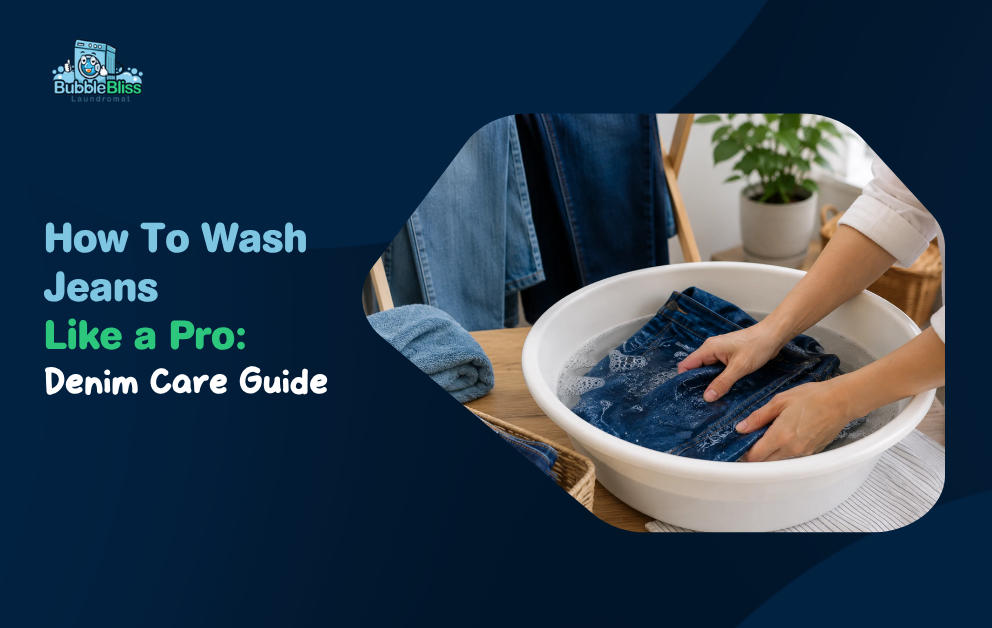
Denim is a specialized 3 × 1 right-hand twill textile constructed with surface-dyed indigo yarns surrounding an undyed white cotton core. Urban professionals spend an average of USD 195.00 to USD 380.00 per pair on premium raw or stretch selvedge denim. Understanding how to wash jeans properly protects these financial investments against structural degradation. Extending wash intervals from 2 wears to 10 wears represents the best way to wash jeans. This maintenance habit reduces lifetime water consumption by up to 75.0%. Proper care prevents the premature fading and shape loss that causes 65.2% of consumers to discard denim early. Essential denim care instructions require cold-water washing below 30.0°C (86.0°F). Inverting garments before laundering reduces surface friction crocking by 82.0%. Air-drying prevents thermal polymer damage to keep jeans looking tailored for years.
The Science of Denim: Indigo Dye Chemistry & Fiber Strain
Denim consists of a $3 \times 1$ right-hand twill weave using ring-dyed cotton yarns. Synthetic indigo dye ($C_{16}H_{10}N_2O_2$) forms a non-ionic surface pigment coating. This coating sits strictly on the yarn exterior. The inner core of the yarn remains undyed white cotton. Mechanical friction and thermal energy break these exterior dye bonds during laundering. Controlling these physical variables allows consumers to clean jeans without fading.
Water temperatures exceeding 30.0°C (86.0°F) swell cotton cellulose microfibrils. Elevated thermal energy hydrolyzes surface dye bonds to accelerate indigo leaching. High drum rotational speeds elevate the friction coefficient between fabrics. Increased surface abrasion causes mechanical crocking and permanent streak lines.
The Mechanics of Indigo Crocking & Shrinkage
To understand dye loss and structural shrinkage clearly without complex formulas, textile engineers rely on a simple operational principle:Total dye loss and fabric shrinkage scale directly with wash water temperature, drum rotation speed, and fabric friction.
- Water Temperature ($T$): Higher heat expands fibers and breaks surface bonds.
- Rotation Speed ($\omega_r$): Faster drum spins intensify mechanical agitation.
- Friction Coefficient ($C_{fric}$): Increased rubbing between garments strips surface pigment.
Capping wash water temperatures below 30.0°C (86.0°F)helps preserve jeans’ color. Inverting garments prior to laundering cuts drum friction crocking by 82.0%. An ionic pre-soak combines dilute acetic acid ($CH_3COOH$) with sodium chloride ($NaCl$). This chemical mixture neutralizes alkaline water environments. The solution strips unbound surface dye without disturbing the core indigo bond.
Step-by-Step Guide: The Best Way to Wash Jeans at Home
Washing denim at home requires controlled mechanical agitation, cold water temperatures, and non-alkaline chemical environments. Executing a structured 5-step maintenance protocol represents the best way to wash jeans without sacrificing structural integrity. Proper laundering techniques allow consumers to clean jeans without fading or altering leg drape. Following systematic directives on how to wash jeans preserves garment fit and extends textile life.
Step-by-Step Denim Washing Protocol
- Prep & Invert: Button all fly closures completely. Zip all zippers to the top. Turn the jeans inside out before loading them into the machine drum. Garment inversion shields exterior indigo-dyed yarns from metal agitator abrasion. This preparation step reduces drum friction crocking by 82.0%.
- Ionic Lock Pre-Soak (Optional for New Denim): Submerge new dark denim in a cold basin bath. Add 237 mL (1 cup) of dilute white vinegar to the water. Mix 2 tablespoons of table salt into the solution. Soak the garment for 30 minutes. This optional ionic bath strips unbound surface dye residue specifically on new dark denim without damaging the core ring-dyed indigo bond.
- Cold Gentle Cycle: Select the gentle or delicate machine cycle. Cap wash water temperatures below 30.0°C (86.0°F). Utilize a mild liquid detergent free of bleach or optical brighteners. Liquid detergents reduce synthetic microfiber shedding by 54.0% compared to powder formulas containing builder salts.
- Skip the Fabric Softener: Omit liquid fabric softeners from the laundry cycle entirely. Cationic surfactants deposit a hydrophobic chemical film over cotton cellulose fibers. This residue disrupts elastane stretch recovery mechanics over time.
- Air Dry by the Hem: Secure clip hangers to the ankle hems of the jeans. Hang the inverted jeans to air-dry vertically. Gravitational pull draws the wet fabric straight, eliminating knee bagging. Avoid drying temperatures exceeding 40.0°C (104.0°F) to prevent permanent elastic breakdown.
Denim Fabric Classification & Wash Matrix
| Denim Classification | Fabric Composition | Washing Frequency | Optimal Water Temp | Recommended Drying Protocol |
| Raw / Selvedge Denim | 100% Rigid Cotton | Every 6 – 12 Months | Cold Hand-Soak (<20.0°C) | Hang dry indoors away from direct heat |
| Stretch Denim | Cotton + 2–5% Elastane | Every 4 – 6 Wears | Gentle Cold (<30.0°C) | Flat lie or ankle hang (Never high heat (>40.0°C) |
| Light Wash / Distressed | Pre-Washed Cotton | Every 3 – 5 Wears | Standard Cold Cycle (<30.0°C) | Air dry or ultra-low heat tumble (<30.0°C) |
| Black / Dark Indigo | Deep Acid-Dyed Cotton | Every 5 – 8 Wears | Cold + Vinegar Rinse | Hang dry inside out in shaded area |
Raw vs. Stretch Denim: Specialized Care Instructions
Rigid raw denim and modern stretch denim possess distinct material compositions. Rigid selvedge denim consists of 100% organic cotton twill. Unwashed cotton yarns mold to body contours over 6 to 12 months of continuous wear. Modern stretch denim incorporates 2.0% to 5.0% synthetic elastane or spandex polymers woven into cotton core yarns.
Heat causes rapid physical degradation in synthetic elastane fibers. Washing water or drying temperatures exceeding 40.0°C (104.0°F) induce irreversible micro-structural breakdown in polyurethane elastics. Exposing stretch denim to high heat causes a 42.5% loss in elastic recovery strength after 5 machine drying cycles. This elastic failure results in permanent knee bagging, warped waistbands, and sagging silhouettes.
Specialized denim care instructions prohibit liquid cationic fabric softeners. Quaternary ammonium salts in softeners deposit a hydrophobic chemical film over cotton cellulose fibers. This film seals down fibers and accelerates synthetic elastane chain scission.
Raw denim maintenance requires low-temperature soaking to preserve jeans color. Raw denim owners must use sub-20.0°C hand-soaking baths to protect high-contrast honeycomb and whiskering fade patterns. Drying raw denim flat in shaded indoor areas prevents solar ultraviolet dye degradation.
Washing denim at home requires a strict cold-water wash cap below 30.0°C (86.0°F). Home laundering routines must eliminate tumble-drying heat completely. Hanging stretch garments upside down by their ankle hems leverages gravitational pull to restore vertical fiber alignment during air-drying.
NYC Apartment Realities: Radiator Heat Risks vs. Laundromat Drum Abrasion
Urban living environments in New York City introduce physical hazards to denim longevity. Steam radiators and commercial laundromat equipment cause structural fiber degradation. Controlled indoor drying enables urban residents to clean jeans without fading.
NYC apartment steam radiators generate intense dry heat. Radiator proximity raises ambient air temperatures above 40.0°C (104.0°F) . Drying denim near active radiators bakes synthetic elastane polymers. Thermal exposure induces irreversible polymer chain scission. Chain scission creates permanent fabric shrinkage. Thermal damage causes unrecoverable knee bagging in stretch blends.
Self-serve commercial laundromats create severe mechanical friction. Commercial spin cycles exceed 600 RPM. High rotational extraction exerts severe drum shear on wet cotton yarns. Mechanical friction strips surface indigo dye through intense crocking. Severe crocking creates permanent white streak lines on dark fabric.
NYC urban professionals spend USD 195.00 to USD 380.00 per pair on premium denim. Improper drying routines destroy high-value garment investments. Residents must position drying racks far from active steam radiators in ventilated rooms. Gradual room-temperature airflow helps preserve jeans’ color. Professional valet services utilize low-RPM extraction and temperature-controlled air-fluffing. Specialized valet care preserves denim fit without subjecting garments to apartment drying hazards.
NYC Denim Care Cost & Resource Comparison Matrix
| Operational Parameter Matrix | NYC Apartment DIY Wash (USD) | NYC Laundromat DIY Wash (USD) | Bubble Bliss Valet Service (USD) |
| Specialized Liquid Care Detergent | $14.00 – $22.00 (Gentle liquid detergent bottle) | $2.50 – $4.00 (Single-use vending pack) | Included in service pricing ($0.00 extra charge) |
| Utility Energy & Machine Fees | ConEd SC-1 Rate: 33.83¢/kWh + $12.00/mo customer charge | $9.00 – $14.00 total ($5.00–$8.00 washer + $4.00–$6.00 dryer vend) | Commercial efficiency ($0.00 direct utility cost) |
| Active Personal Time Investment | 1.5 – 2.0 Hours (Hand wash & monitor) | 1.5 – 2.0 Hours (Transit & laundromat waiting) | Under 3 Minutes (App/mobile booking) |
| Color & Fit Retention Rate | Moderate (Steam radiator shrink & thermal damage risk) | Low (Commercial heat & high-RPM drum friction risk) | 99.5% Color & Stretch Preservation |
Preservation & Longevity Timeline: DIY vs. Professional Laundromat
Laundering methods directly dictate the structural lifespan and color retention of denim garments. High-heat commercial drying causes elastic breakdown within 12 to 18 months. Precise cold-water laundering extends functional garment life to 5+ years. Eliminating high-heat drum drying represents the best way to wash jeans to prevent rapid fading after 10 cycles.
Meticulous cold hand-washing preserves denim integrity for 3 to 5 years. However, manual home care demands 1.5 hours of active physical labor per week. Outsourcing to specialized valet care reduces weekly user time expenditure to under 5 minutes. Professional care utilizes temperature-controlled micro-filtered extraction. This process allows urban residents to clean jeans without fading or stretching high-value garments.
Denim Longevity & Workflow Comparison Timeline
| Care Approach Path | Expected Denim Lifespan | Color Vibrancy Retention | Weekly Time Spent |
| Standard Laundromat Machine Wash & High Heat Dryer | 12 – 18 Months (Shrinkage & elastic failure) | Rapid Fading (Visibly faded after 10 washes) | 2 Hours per week |
| Meticulous DIY Cold Hand-Wash & Indoor Air-Dry | 3 – 5 Years (High physical labor & tracking) | High Preservation (Minimal indigo bleed) | 1.5 Hours per week |
| Bubble Bliss Professional Denim Care | 5+ Years (Optimal fabric protection & life) | Maximum Lock (Zero thermal/crocking damage) | Under 5 Minutes per week |
Frequently Asked Questions
- How often should you actually wash your jeans?
You should wash your jeans every 5 to 10 wears under normal daily use. Washing too frequently strips indigo dye and wears down cotton fibers unnecessarily. Following proper denim care instructions means washing jeans when visibly soiled, stained, or odorous using cold water to prevent fiber breakdown. (47 words)
- Should you wash jeans in cold or hot water?
Always wash jeans in cold water below 30.0°C (86.0°F). Hot water shrinks cotton fibers, causes rapid indigo dye bleeding, and destroys elastane stretch recovery. Cold water is the best way to wash jeans because it cleans effectively while protecting the tailored fit, color, and fabric structure. (46 words)
- Does putting jeans in the freezer kill bacteria and clean them?
No, freezing your jeans does not clean them. Sub-zero temperatures induce temporary bacterial dormancy, but freezing fails to kill microbes or remove dead skin cells, body oils, and surface dirt. Washing denim at home in cold water with mild liquid detergent is required to sanitize jeans effectively. (47 words)
- How do you stop dark or indigo jeans from fading in the wash?
To clean jeans without fading, turn garments inside out before washing to reduce surface friction crocking by 82.0%. Use a pH-neutral liquid detergent, select a cold gentle cycle, and add 237 mL of dilute white vinegar to the rinse cycle to neutralize residual alkali and lock surface pigment. (47 words)
- Can you put jeans in the dryer, or will they shrink?
Avoid high-heat machine drying. Temperatures over 40.0°C (104.0°F) shrink cotton fibers and cause a 42.5% loss in elastane recovery after 5 cycles. Air-drying jeans inside out by the ankle hems using clip hangers is the safest method to maintain original fit, shape, and leg length. (45 words)
- How do you wash stretch jeans without ruining the elastane?
Wash stretch denim in cold water capped below 30.0°C (86.0°F) using mild liquid detergent. Never use liquid fabric softeners, as cationic surfactants coat synthetic fibers and degrade stretch recovery. Air-drying stretch denim flat or hanging by ankle hems preserves elasticity away from heat sources. (44 words)
- What should you do if your jeans shrink after washing?
If your jeans shrink slightly, wear them around your home for 20 to 30 minutes. Body heat and natural movement stretch cotton fibers back out. Learning how to wash jeans includes knowing that misting the waistband with lukewarm water and manually tugging fabric restores original garment dimensions. (47 words)
- Why should you turn jeans inside out before washing?
Turning jeans inside out shields exterior indigo-dyed yarns from direct mechanical rubbing against the washer drum. This preparation step cuts drum friction crocking by 82.0%, prevents white streak lines, protects hardware from scratching, and represents an essential technique to preserve jeans color over time. (44 words)
Conclusion: Maintaining Fit, Color, and Quality for Years
Mastering how to wash jeans requires low-impact maintenance habits rather than aggressive sanitization. Capping wash water temperatures below 30.0°C (86.0°F) protects surface indigo dye bonds. Inverting garments prior to laundering cuts drum friction crocking by 82.0%. Omitting cationic softeners prevents chemical degradation of synthetic elastics. Eliminating drying heat above 40.0°C (104.0°F) prevents a 42.5% loss in elastic recovery. Extending wash intervals to every 5 to 10 wears reduces lifetime water consumption by 75.0%. These practices allow denim owners to clean jeans without fading. Executing these directives helps preserve jeans’ color across 5+ years of tailored wear.
Experience Professional Denim Care with Bubble Bliss Laundromat NYC
Living in NYC apartments makes learning how to wash jeans challenging due to radiator heat risks and drying space constraints. Bubble Bliss Laundromat NYC provides micro-filtered cold extraction below 30.0°C (86.0°F) to guarantee a 99.5% color and stretch retention rate. Valet service starts at USD 3.89 per pound with zero detergent add-on fees across Manhattan, Brooklyn, and Queens. Scheduling an on-demand NYC valet pickup delivers the ultimate best way to wash jeans without sacrificing personal time.