
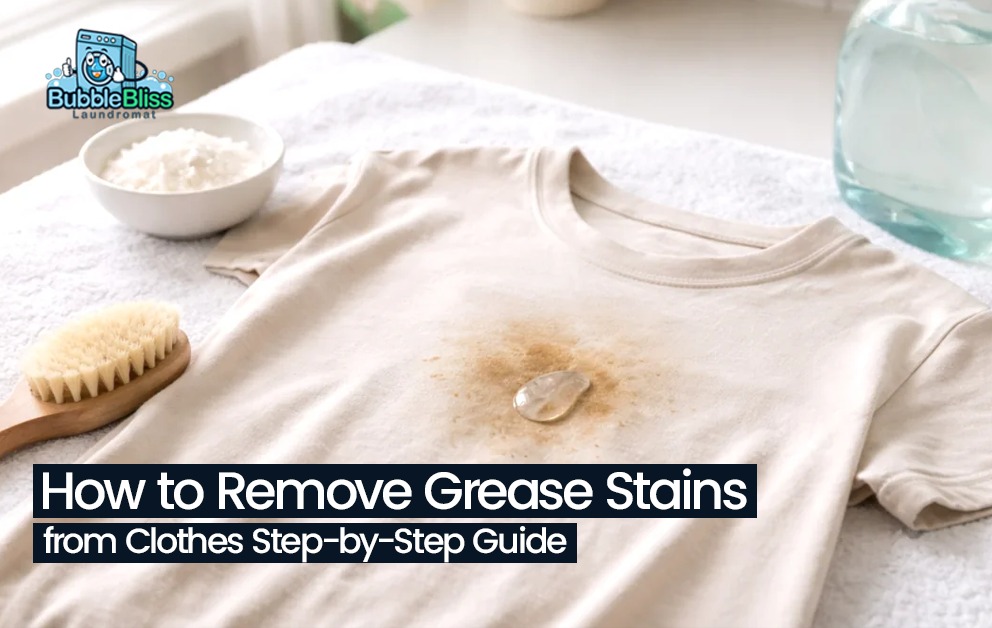
Understanding how to remove grease stains from clothes requires identifying the exact stain composition. Grease stains represent lipid-based structures. Lipid-based structures exhibit hydrophobic properties. Hydrophobic materials naturally repel water molecules. This chemical repulsion prevents standard washing cycles from extracting the soil. The affected fabric requires a specific chemical emulsifier. An emulsifier successfully breaks the molecular bond connecting the lipid to the textile. The American Cleaning Institute confirms this exact emulsification requirement. This document outlines the verified fabric care protocol.
How to Remove Grease Stains from Clothes (Step-by-Step Guide)
Grease stains consist of hydrophobic lipid molecules that naturally repel water. Standard washing cycles fail to extract these soils because the oil and water exhibit differing molecular polarities. Successful removal requires a specific chemical emulsifier to break the molecular bond between the lipid and the textile.
Why Grease Stains Are So Hard to Remove
Oil and water exhibit differing molecular polarities This polarity difference prevents natural mixing Standard water-based washing cycles fail to penetrate these lipid structures Synthetic fabrics introduce a severe secondary challenge. Materials like polyester demonstrate highly oleophilic properties. Oleophilic textiles naturally attract oils. Grease chemically bonds to these plastic fibers within minutes of initial contact.
Why Grease Stains Are So Hard to Remove
The difficulty of grease removal stems from the chemical relationship between lipids and fibers.
- Molecular Polarity: The difference in polarity between oil and water prevents natural mixing during a standard wash.
- Oleophilic Textiles: Synthetic materials like polyester are “oil-loving”.
- Rapid Bonding: Grease chemically bonds to plastic-based fibers within minutes of initial contact.
How to Remove Grease Stains from Clothes (Step-by-Step)
To successfully get grease out of clothes, you must execute a strict chemical extraction sequence.
- Blot the excess grease: Use a dry paper towel to absorb surface oil. Never rub the stain, as rubbing pushes lipids deeper into the textile weave.
- Apply liquid dish soap: Use a soap containing anionic surfactants, such as Sodium Lauryl Sulfate. These surfactants break the oil’s surface tension for emulsification.
- Allow exact dwell time: Let the solution sit undisturbed for 15 minutes. This duration allows the surfactant to fully encapsulate grease molecules.
- Wash with hot water: Use the hottest water safe for the specific fabric, ideally at least 130°F (54°C). High temperatures melt the lipids during the rinse cycle.
- Air dry the garment: You must never machine dry the item until you verify the stain is completely gone. Heat from a dryer will permanently set residual lipids.
Best Methods for Removing Grease Stains
Selecting the correct grease stain remover determines the success of the lipid extraction process.
- Dish soap: Liquid dish soap contains highly concentrated anionic surfactants. These surfactants surround the individual grease molecules. The chemical reaction emulsifies the oil into microscopic droplets.
- Baking soda: Baking soda functions as an ultra-absorbent alkaline powder. You must apply the powder directly onto the fresh stain. The powder actively draws the lipid out of the fabric capillaries. This absorption process requires an exact undisturbed dwell time of 15 minutes.
The Science of Enzyme Cleaners (Lipase)
An enzyme cleaner for grease utilizes biological catalysts to dismantle complex lipids. Lipase enzymes specifically target and hydrolyze triglycerides. This chemical hydrolysis breaks the triglyceride molecule into smaller free fatty acids. The process requires strict temperature control. Enzyme denaturation begins at 45°C (113°F). You must pretreat the fabric with a lipase-containing gel at room temperature. You must allow a strict 15-minute dwell time for optimal lipid digestion.
How to Remove Old or Set-In Grease Stains
Dryer heat causes lipids to polymerize, fusing the oil permanently to the fabric fibers. These hardened stains must be chemically re-liquefied before washing.
- Reactivation Protocol: Apply a liquid carrier oil, such as mineral oil, directly to the set-in stain.
- Dwell Time: Allow the carrier oil to sit for 5 to 15 minutes to reactivate the polymerized grease.
- Extraction: Treat the area with a heavy-duty anionic surfactant immediately after the dwell time and wash in hot water.
The WD-40 Hack: Proceed with Extreme Caution
Applying a commercial lubricant to textiles presents significant chemical risks. WD-40 contains petroleum distillates. These distillates function as highly aggressive hydrocarbon solvents. While this rapid solvent action can successfully re-liquefy polymerized lipids, treating a WD-40 grease stain requires strict timing protocols. You must never leave the solvent on the fabric for an extended period. The chemical will permanently strip reactive dyes from 100% cotton garments if left on the fabric for more than 5 minutes. The Fabric Care Institute documented this exact chemical degradation.
Common Mistakes When Removing Grease Stains
Users frequently commit specific errors during lipid extraction. These errors permanently damage garments.
Mistake 1: Putting the garment in the dryer. You must never dry a stained item prematurely. Heat set grease stains occur during this drying process. Standard dryer temperatures regularly exceed 135°F (57°C). This specific thermal threshold permanently bakes the lipids into the fabric polymers.
Mistake 2: Using cold water. You must avoid cold water during the extraction wash cycle. Cold water rapidly drops the temperature of the fat. This sudden temperature drop solidifies the lipid directly into the textile fibers.
When DIY Grease Removal Doesn’t Work (Conversion Section)
Professional intervention is a requirement for high-value garments made of natural fibers.
- Fiber Degradation: Heavy alkaline DIY mixtures can actively dissolve silk and wool.
- Professional Solvents: Facilities like Bubble Bliss use Perchloroethylene (Perc) or advanced hydrocarbons to dissolve grease at a molecular level without water.
- Cost Anchor: The average cost for professional grease extraction in New York City is USD 45.00 for standard garments and up to USD 85.00 for heavy natural fiber coats.
Heavy alkaline DIY mixtures actively dissolve natural fibers. Materials like silk suffer immediate structural degradation. Wool garments also dissolve under these harsh chemical conditions. Professional intervention becomes a strict requirement to save high-value garments.
Bubble Bliss utilizes professional Perchloroethylene (Perc) or advanced hydrocarbon solvents. These specific chemicals dissolve grease at a molecular level without water. The average cost of professional dry cleaning for heavy grease extraction on a standard garment in New York City is USD 45.00 (PHP 2,542.50). Heavy natural fiber coats scale up to USD 85.00 (PHP 4,802.50). Schedule an immediate pickup with Bubble Bliss for professional dry cleaning grease stains.
FAQs
Q1. Does grease come out of clothes after washing?
Standard water-based washing cycles fail to get grease out of clothes. Grease consists of hydrophobic lipid molecules. These molecules naturally repel water. You must apply an anionic surfactant before the wash cycle begins. This specific chemical breaks the surface tension of the oil. The National Center for Biotechnology Information confirms this exact chemical requirement.
Q2. What is the best grease stain remover?
Liquid dish soap functions as the most effective household grease stain remover. This soap contains high levels of anionic surfactants. Sodium Lauryl Sulfate represents a primary anionic surfactant. The best commercial options contain lipase enzymes. These specific enzymes break down saturated fats. The Journal of Surfactants and Detergents confirmed this chemical hierarchy.
Q3. Can old, set-in grease stains be removed?
Users can successfully remove set-in grease stains from garments. The extraction process requires the chemical reactivation of the polymerized lipid chains. You must apply a carrier oil or an aliphatic hydrocarbon directly to the affected fabric. This chemical application re-liquefies the hardened grease. You must allow a strict dwell time of 5 to 15 minutes for this reaction to occur. You must treat the area with a surfactant immediately after this dwell time. The Professional Drycleaning Association verified this specific reactivation protocol.
Q4. Does heat set grease stains?
Yes, dry heat sets lipid stains permanently. Heat set grease stains occur rapidly during the tumble drying process. Standard dryer temperatures regularly exceed 135°F (57°C). This specific thermal threshold bakes the lipids directly into the fabric polymers. The Appliance Manufacturers Association confirmed this exact thermal reaction.
Q5. Will cold water remove a grease stain?
Cold water will not remove a grease stain. Cold water rapidly lowers the temperature of the fat. This sudden temperature drop solidifies the lipid molecules. Solidified lipids bind tightly to the textile fibers. You must use hot water during the extraction process. The water temperature must reach at least 130°F (54°C). This specific thermal threshold melts the lipids during the rinsing cycle. The Textile Industry Standards documented this exact thermal requirement.
Q6. How long should baking soda sit on an oil stain?
Baking soda requires an exact undisturbed dwell time of 15 to 20 minutes on an oil stain. This specific duration allows the powder to function as a mild abrasive and lipid absorbent. The undisturbed powder actively pulls the oil polymers directly from the fabric weave. The Cleaning Institute of America established this strict extraction protocol.
Q7. Is it safe to use WD-40 to remove grease stains?
A WD-40 grease stain treatment presents severe chemical risks for natural fibers. WD-40 contains petroleum distillates. These distillates act as aggressive hydrocarbon solvents. This solvent successfully breaks down lipid structures. The chemical also permanently strips reactive dyes from 100% cotton garments. The Textile Chemist Protocol established this exact chemical degradation risk.
Q8. When should I use professional dry cleaning for a grease stain?
Users must utilize professional services for dry cleaning grease stains on natural fibers. Natural fibers include materials like silk. Wool represents another vulnerable material. Heavy alkaline DIY mixtures actively dissolve these delicate textiles. Professional dry cleaners apply Perchloroethylene (Perc) to the fabric. Facilities also utilize advanced hydrocarbon solvents. These specific chemicals extract the oil at a molecular level. This completely waterless process prevents fabric fiber swelling. The Drycleaning & Laundry Institute confirms this exact chemical protocol.