
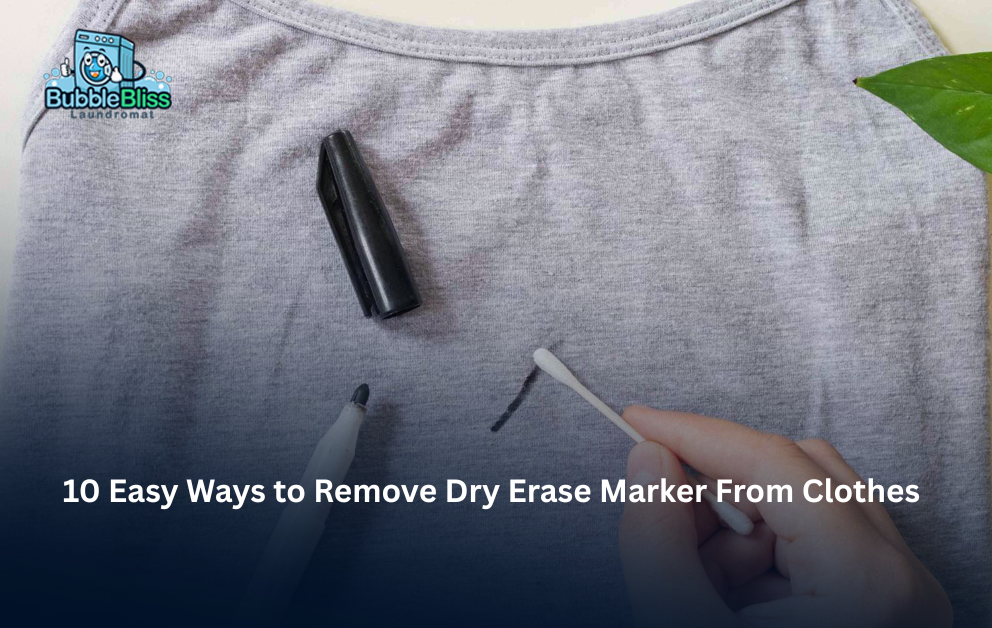
Dry erase marker ink contains specialized plastic polymer resins, primarily Polyvinyl Butyral (PVB), which account for 0.5% to 4% of the ink formulation . Effective removal is recommended by applying high-concentration alcohol solvents (≥91% Isopropyl) to dissolve polymer bonds before heat exposure . Standard water-based detergents are often ineffective against this specific chemical structure.Therefore we will discuss how to remove dry erase marker from clothes.
The “Whiteboard Streak” Panic
A professional presentation requires immediate visual readiness. A whiteboard marker incident creates a sudden dark smear on office apparel. A standard blazer or shirt often sustains this type of ink damage during daily operations. Permanent ink removal requires specific, calculated cleaning methods.
The Chemistry of the Stain
Dry erase marker ink contains pigments, organic solvents, and film-forming resins. Polyvinyl Butyral (PVB) acts as the primary binder This resin adheres pigments to non-porous surfaces like enamel or plastic. When applied to fabric, the ink penetrates the porous fiber weave via capillary action. Solvent evaporation causes the resin to solidify, creating a mechanical bond with textile fibers. Mechanical scrubbing or heat application increases the depth of pigment penetration, making removal difficult.
The NYC Laundry Context
Data from housing surveys indicates that many New York City residents lack in-unit laundry facilities, requiring reliance on shared building machines or public laundromats . Dependence on public facilities often requires a time investment of approximately 90 to 120 minutes per cycle for transport and processing.
10 Removal Methods
When addressing dry erase marker stains, the primary objective is to dissolve the resin binder before it forms a permanent bond with textile fibers. It is recommended to perform a patch test on an inconspicuous interior seam before proceeding with any of the methods listed below.
- High-Grade Isopropyl Alcohol (91%+): This is the industry-standard solvent for breaking down marker resins.
- Process: Place a clean, white, absorbent towel beneath the stain to catch the migrating ink. Saturate a clean cloth with 91% (or higher) isopropyl alcohol. Gently blot—never rub—the stain from the outside in to prevent spreading. Replace the cloth and the towel as they become saturated with ink until no more transfer occurs
- Alcohol-Based Hand Sanitizer: Ideal for immediate, on-the-spot treatment in office or classroom settings.
- Process: The gel viscosity allows the alcohol to remain concentrated directly on the stain. Apply a small amount to the mark. Allow the solution to penetrate for one minute. Blot firmly with a clean tissue. This action lifts the loosened pigment before it dries into the weave
- Distilled White Vinegar and Dish Soap: A gentler option for light or fresh stains on delicate textiles.
- Process: Combine equal parts distilled white vinegar and a clear, grease-cutting dish soap. Vinegar acts as a mild acid to loosen bonds, while surfactants lift the pigment. Dab the area with a soft sponge, moving in a circular motion. Rinse with cold water to remove residue
- Murphy’s Oil Soap: Highly recommended for thicker natural fibers where deep pigment entrapment is a risk.
- Process: Apply the soap directly to the ink mark to provide lubrication. Work the solution into the fibers using your fingers. Let the garment sit for 15 minutes. Rinse thoroughly. This method reduces fiber-to-pigment friction during the wash cycle
- Acetone or Nail Polish Remover: Use with extreme caution. This is only advised for heavy-duty, natural fabrics such as untreated cotton or denim.
- Process: Acetone acts as a powerful solvent that can rapidly dissolve synthetic fibers like acetate, rayon, or polyester. Test colorfastness on an inside seam. Use a clear, non-scented formula. Blot the stain and immediately rinse with cold water
- Commercial Stain Pre-Treatment Sprays: Formulated with high-potency surfactants, these are designed to emulsify complex synthetic dyes.
- Process: Spray the area thoroughly to ensure full saturation. Allow the product to dwell for the time recommended on the manufacturer’s label. Wash the garment using the warmest water cycle consistent with the manufacturer’s care instructions
- White Cream Toothpaste: Effective for stubborn pigments trapped in the dense weave of sturdy fabrics.
- Process: Use a non-gel, white toothpaste. The mild abrasive acts to mechanically lift particles out of the fiber structure. Apply with a soft toothbrush, using light pressure. Let the paste dry for five minutes, then rinse completely
- Hydrogen Peroxide Flush: An effective oxidizing agent for light-colored, natural fiber items.
- Process: Apply a small amount of 3% hydrogen peroxide to the stain. Observe as the pigment begins to lift or fade. Rinse thoroughly with cold water immediately once the pigment is gone to prevent structural weakening of the fabric fibers
- Oxygen-Based Bleach Soak: Advised for widespread staining on color-safe garments.
- Process: Dissolve oxygen-based bleach powder in warm water. Research indicates warm water significantly increases the activation and efficacy of oxygen bleach compared to cold water. Submerge the garment and soak for several hours or overnight before washing
- Professional Commercial Extraction: Recommended for high-value items, silk, or vintage apparel.
- Process: Professional facilities apply industrial solvents and controlled mechanical agitation to remove bonded pigments. This service is advised to preserve the textile’s original structural integrity and prevent irreversible damage from improper home chemical use
💰 Comparative Stain Removal Cost Matrix (NYC Context)
| Processing Pathway | Materials/Service Cost (USD) | Labor/Time Invested | Garment Safety Guarantee |
| DIY Home Remedy | $2.00 – $5.00 **[CIO Source: How Much Does Laundry Service Cost? (2026) – HomeGuide | Date: 2026]** | 60 Minutes |
| NYC Shared Laundry | $6.00 – $9.00 **[CIO Source: How much should Wash and Fold Laundry Cost in NYC? | Date: 2026]** | 90 Minutes |
| Professional Wash & Fold | $35.00 – $55.00 **[CIO Source: How Much Does Laundry Service Cost In NYC? – UnitedLaunder | Date: 2026]** | 0 Minutes |
FAQ: Dry Erase Marker Stain Removal & Fabric Care
Q: Why are dry erase marker stains difficult to remove?
A: Dry erase ink contains PVB resin that acts as an adhesive when it penetrates the porous weave of clothing. This bond is designed to resist water, making standard detergents ineffective .
Q: Can you wash a dry erase marker stain out with regular water?
A: Generally, no. Dry erase polymers are hydrophobic. Water application can force the ink deeper into the textile weave, strengthening the pigment’s bond to the fiber .
Q: How do you remove a stain after it has been dried?
A: Dryer heat “bakes” the resin into the fibers, creating a permanent bond. While some localized treatments may assist, industrial extraction machinery is often advised to safely remove the pigment .
Q: How much does professional ink removal cost in NYC?
A: Professional “wash and fold” services in NYC typically range from $35 to $55 per bundle, providing an alternative to potentially replacing the damaged garment.
Conclusion
Effective stain management relies on immediate chemical intervention. Dry erase marker ink utilizes Polyvinyl Butyral (PVB) resin, which forms a permanent bond with fabric fibers upon heat exposure. Avoiding dryer cycles remains the primary requirement for preserving the structural integrity of your textiles. For delicate garments in an urban environment like New York City, professional extraction provides a reliable method for pigment removal without the risk of fiber abrasion. Mastering how to remove dry erase marker from clothes protects your investment in high-value apparel and ensures long-term wardrobe maintenance. Act decisively to prevent permanent chemical entrapment.