
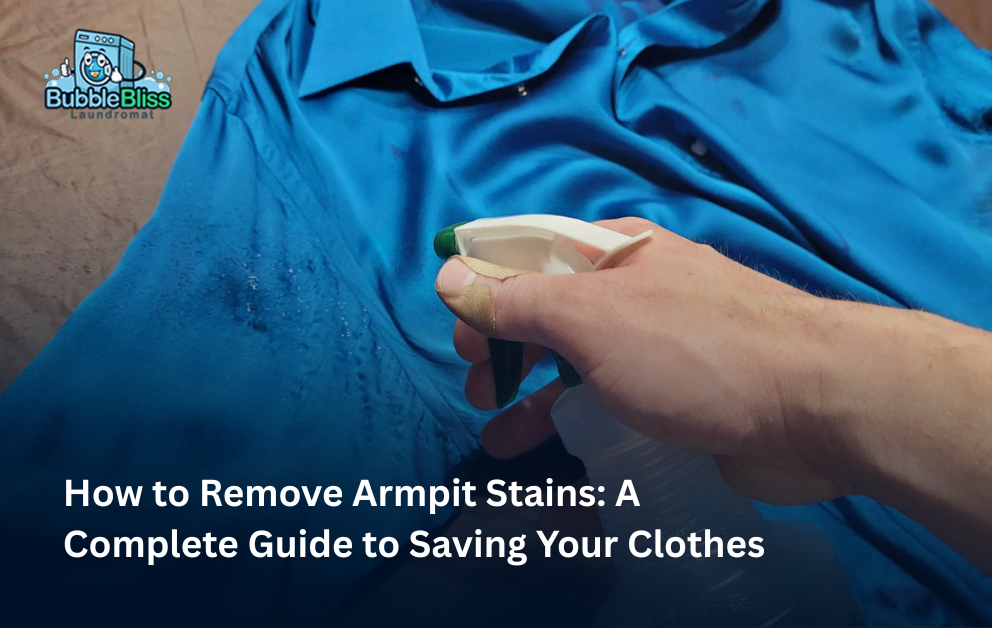
Persistent underarm discoloration and yellow stains ruin high-quality shirts. These stains are not simple sweat marks; they represent a complex chemical network—a combination of sweat proteins (keratin), sebum (skin oils), and aluminum-zirconium antiperspirant salts—that has polymerized directly within the textile fibers. These stains are chemically reversible provided the user avoids the “heat-set” trap by strictly abstaining from clothes dryers until the stain is fully extracted. This guide details a hierarchy of solutions, ranging from targeted enzymatic pre-treatments for home use to professional restoration for high-value silk or wool textiles.
The Science: What Causes Yellow Underarm Stains?
Human sweat is inherently colorless and odorless. Visible yellowing results from a chemical reaction between body secretions and antiperspirant ingredients. When apocrine sweat—rich in keratin proteins and sebum lipids—mixes with aluminum-zirconium antiperspirant salts (e.g., Aluminum Zirconium Tetrachlorohydrex GLY), they cross-link and polymerize within the fabric.
If this protein-lipid-aluminum complex is subjected to temperatures exceeding $40^{\circ}C$ ($104^{\circ}F$)—whether from body temperature or a tumble dryer—it “bakes” into the cellulose fibers of cotton shirts. This polymerization causes the fabric to become stiff or crusty. Users must distinguish between white, waxy “deodorant residue” (which sits on the surface of dark clothing) and the chemical-reaction-based “yellow sweat stain” (which penetrates the fiber matrix).
Table 1: Key Facts of Underarm Discoloration
| Fact Parameter | Technical Scientific Data | Impact on Textiles |
| Primary Catalyst | Aluminum Zirconium Tetrachlorohydrex GLY | Polymerizes proteins into fabric; forms a permanent matrix. |
| Organic Compound | Human Sebum & Apocrine Proteins | Acts as the substrate for oxidative yellowing and fiber stiffening. |
| Critical Temperature | $>40^{\circ}C$ ($104^{\circ}F$) | Accelerates permanent “baking” of the protein-aluminum complex. |
Step-by-Step DIY Protocols to Get Armpit Stains Out of Clothes
Effective stain removal involves controlled chemical extraction rather than aggressive scrubbing. The objective is to solubilize the polymerized aluminum-protein matrix without compromising the integrity of the textile fibers.
Stage 1: Identify Fabric Profile
Before treatment, identify the fabric to select the appropriate extraction path.
Path A: Cotton / Synthetic Fabrics
- Mix Paste: Combine 2 parts baking soda, 1 part 3% hydrogen peroxide, and 1 part room-temperature water.
- Apply: Use a soft-bristled brush to apply the paste to the stain.
- Activate: Allow 45 to 60 minutes for the paste to oxidize the protein matrix.
Path B: Silk / Merino Wool
- Prepare Solution: Mix a 1:4 dilution of white vinegar to water.
- Submerge: Gently submerge the fabric in the solution.
- Soak: Allow 30 to 60 minutes for the acidic solution to demineralize the stain without damaging protein fibers.
Stage 2: The Cold Water Rinse
Flush the garment from the inside out using cold, high-pressure running water. This physical action forces the dissolved residue to exit through the fiber weave it entered through, rather than driving the complex deeper.
Stage 3: Launder & Line Dry
Follow the final wash with an enzyme-based detergent to remove residual protein and lipid debris. Do not subject the garment to machine heat until the stain is 100% extracted. Line drying under natural light allows for inspection and prevents the irreversible heat-setting of the remaining complex.
The Financial & Material Cost Matrix
Textile care requires precise resource allocation. The following table outlines the estimated costs for home versus professional treatments.
| Supply Type / Ingredient | Average Cost (AUD) | Average Cost (PHP) | Fabric Suitability Index |
| Distilled White Vinegar (16 oz) | $3.75 | 147 PHP | Effective for cotton/linen; may degrade elastic. |
| Baking Soda (16 oz) | $2.25 | 88 PHP | Safe for heavy cotton; avoid Silk & Wool. |
| Hydrogen Peroxide 3% (16 oz) | $3.00 | 118 PHP | High risk of yellowing on colored textiles. |
| Professional Wash | $5.25 – $22.50 | 206 – 885 PHP | Certified for all fabrics; zero risk to integrity. |
When DIY Fails: Professional Stain Extraction vs. Home Laundering
Home remedies have structural limitations regarding heat-set stains or high-value bespoke garments. If a garment has undergone a hot dryer cycle, the aluminum-protein complex may have permanently fused to the fibers. Continued home treatment risks “chemical burns,” causing fiber fraying and structural thinning.
Professional commercial stain removal services are essential for structured suits, wedding gowns, and delicate silks. Facilities like Bubble Bliss Laundromat offer advanced solutions, including customized temperature controls and hyper-targeted multi-enzyme dosing (protease and lipase combinations). These services utilize professional mechanical extraction techniques to safely lift deeply embedded bonds without the abrasive friction of home agitation. Engaging a professional laundry service serves as a strategic investment in extending the service life of high-value wardrobe assets.
Frequently Asked Questions (FAQ)
Q1: Can old, dried armpit stains be completely removed from shirts?
A1: Yes, these require intensive rehydration. Apply a concentrated mixture of baking soda and hydrogen peroxide, allowing it to break down the hardened aluminum-protein bond for 45-60 minutes before starting a cold machine cycle.
Q2: Is it safe to use chlorine bleach on yellow underarm stains?
A2: No. Chlorine bleach reacts chemically with sweat proteins, darkening the discoloration and creating a deeper, permanent yellow shade. Use eco-friendly oxygen bleaches instead.
Q3: Why do my dark shirts get stiff white armpit residues?
A3: Stiff white crusts on dark garments indicate deodorant residue rather than yellow sweat stains. This is caused by a buildup of antiperspirant waxes and aluminum compounds. These respond best to warm, targeted white vinegar soaks, which break down the mineral bonds.
Q4: How does tap water affect home stain removal?
A4: Regional water hardness varies; high mineral content can inhibit surfactant performance, requiring stronger enzymatic interventions to get sweat stains out of clothes.
Q5: Can I use standard baking soda formulas on silk or wool apparel?
A5: No. Baking soda has an alkaline pH of 8.3. This pH level chemically degrades animal-derived protein fibers, leading to permanent structural fraying or holes.
Q6: Does heat from a standard clothes dryer lock sweat stains permanently?
A6: Yes. Running a stained shirt through a dryer at temperatures above $40^{\circ}C$ ($104^{\circ}F$) chemically bakes the aluminum-protein complex into the cellulose fibers. This triggers polymerization, making the mark nearly impossible to extract without high-performance enzyme laundry detergents.
Q7: How can I effectively prevent armpit stains from developing?
A7: Switch to an aluminum-free deodorant and allow your antiperspirant to dry completely before dressing. Wearing a breathable, sweat-proof undershirt creates a defensive barrier that keeps proteins and chemicals from reaching your premium outer clothing.
Q8: When should I skip home remedies and choose professional laundry services?
A8: Choose professional services if the stain is on a structured, delicate, or dry-clean-only garment like silk or wool. Professional providers use customized enzyme treatments and advanced temperature-controlled extraction methods to safely lift deep stains without damaging the fabric.