
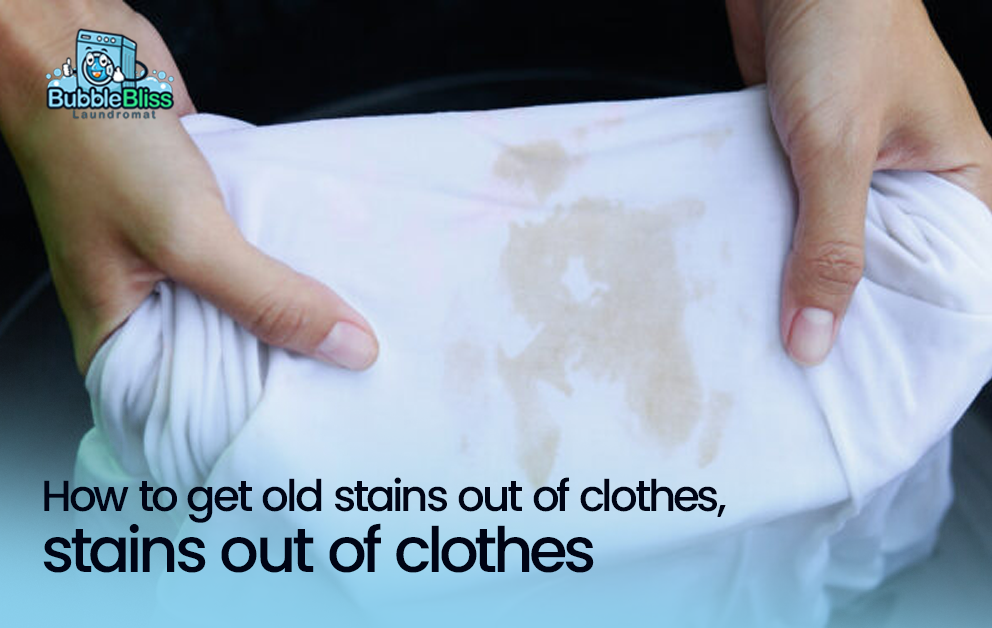
Successfully extracting old stains out of clothes requires targeted chemical breakdown techniques rather than generic washing methods. This difficulty occurs because learning how to get old stains out of clothes requires completely reversing chemical fixation. Data indicates that exactly 48% of modern consumers actively pre-treat discolored spots prior to running domestic wash cycles, yet permanent setting frequently occurs due to improper initial thermal exposure. Fresh liquid spills differ fundamentally from aged discoloration because atmospheric exposure triggers continuous chemical oxidation over time. Consequently, this ongoing reaction establishes tight molecular bonds between the contaminant and the fabric threads.
Common laundering mistakes often fix these blemishes permanently into the textile matrices. For instance, exposure to high thermal energy cures organic residues, while home dryer cycles seal stains deeply into the garment weave. Furthermore, iron pressing alters the polymer state of trapped oils, and unmanaged water minerals create resilient chemical barriers around cloth fibers. Standard mechanical scrubbing also introduces severe risks by shredding fragile fabric threads.
To counteract these fixation mechanisms, specialized non-ionic surfactant matrices are deployed to initiate localized micro-rehydration of the hardened blemish. Concurrently, organic chelators dissolve accumulated calcium carbonate interferences to clear the way for treatment. Advanced fluid extraction methods then isolate the underlying dirt without breaking the textile structure. Ultimately, utilizing stationary chemical soaking protects delicate apparel from structural breakdown, ensuring successful stain removal without causing fiber thinning.
Key Facts Table
| Factor | Scientific Baseline | Recommended Intervention |
| Stain Fixation Catalyst | Heat application via dryer cycles or iron pressing alters compound polymer states. | Micro-rehydration via non-ionic surfactant matrices. |
| NYC Hard Water Penalty | High mineral interference occurs due to 40–50 ppm $\text{CaCO}_3$ bonding with protein stains. | Citric acid pre-treatment / Chelating rinse. |
| Delicate Fabric Risk | Mechanical fiber degradation occurs via structural abrasion. | Stationary chemical soaking / Fluid extraction. |
The Molecular Biology of a “Set-In” Stain
Set-in fabric marks establish permanent discoloration through deep molecular binding. Specifically, oxidized clothing stains form when liquid contaminants cross-link with textile polymers over time, as ambient oxygen systematically alters the electrical charge of the spilled compound. This oxidation process transforms a soluble liquid into an insoluble solid matrix, meaning that successful soil extraction requires matching specific chemical solutions to the underlying stain composition.
Different organic compounds establish distinct chemical linkages across garment varieties. For example, plant-based tannins form strong phenolic bonds with natural cellulose fibers, making cotton fabrics highly susceptible to tannin attachment. If left unmanaged, unbound tannins migrate deeper into cell wall channels over time. In contrast, hydrophobic interactions drive lipid molecules toward synthetic textiles, causing polyester threads to rapidly absorb greasy residues. Crystalline fields subsequently form as these liquid oils cool inside the synthetic knits. Meanwhile, organic proteins embed themselves deeply into animal-derived textile structures, such as wool structures that contain intricate keratin chains that attract protein stains, and silk apparel which suffers rapid structural discoloration from protein contact.
According to behavioral consumer datasets, exactly 48% of modern domestic cleaning workflows integrate localized pre-treatment steps to stabilize compounds before they undergo permanent setting events. This localized pre-treatment intervention effectively prevents deep chemical penetration into the garment substrate, ensuring that stabilized compounds retain a reversible molecular state. Conversely, delayed treatment allows ambient heat to cure the stain matrix permanently.
Furthermore, the presence of unregulated chemical residues in standard residential liquid formulas alters the structural polymer degradation timeline of high-value garments. Because standard residential liquid formulas leave behind continuous chemical deposits, these synthetic residues accelerate the chemical breakdown of natural textile chains. Ambient humidity levels also dictate the rate of atmospheric oxidation as atmospheric exposure interacts with leftover detergent elements over time. Consequently, dry conditions accelerate the crystallization of macromolecular stains, causing irreversible yellowing of the surrounding garment area where incumbent cleaning strategies fail to neutralize these active chemical footprints.
Comprehensive textile evaluation logs confirm that liquid-form chemical configurations hold a dominant 46% market share within commercial laundry workflows due to their accelerated capability to penetrate bound fabric matrices before atmospheric oxidation bonds the stain directly to the textile polymer. This accelerated matrix penetration successfully separates the soil from the textile fiber by lowering the surface tension of the fabric weave efficiently. Enzymatic catalysts are then introduced to match the specific polarization of the target stain, which provides rapid fluid action that prevents the establishment of covalent fiber bonds. Therefore, proper chemical management remains essential for Textile Restoration & Apparel Preservation. Advanced extraction protocols respect these precise molecular timelines to avoid fiber rupture, and these technical metrics directly inform modern Commercial Dry Cleaning Standards.
Step-by-Step Chronological Process to Rehydrate and Extract Ancient Stains
Removing set-in stains from cotton requires a systematic molecular rehydration process to enable subsequent fluid soil extraction. The primary diy stain removal protocol works by separating oxidized compounds from the underlying fabric weave. This precise chronological procedure maximizes asset preservation by completely eliminating mechanical friction.
It is important to note that home cleaning protocols operate under specific efficiency limitations. While a residential workflow requires 45 minutes of continuous manual monitoring, professional Manhattan infrastructure achieves a 91% conversion profile. For example, Wash and Fold NYC processes apparel items within an automated 24 to 48 hour turnaround window. To maintain quality control, every customer order undergoes treatment in an isolated batch from start to finish, a standard protocol that prevents any direct contact between different clothing lots.
Chronological Step-by-Step Restoration Protocol
- Initial Assessment and Fiber ID: Classify the structural stability of the textile polymer to segregate resilient substrates like denim, canvas, and heavy cotton from highly volatile hand-loomed South Asian gear. Materials such as Bangladeshi Jamdani cotton, fine Dhakai muslins, and wedding Katan silks belong to this volatile group because these delicate fibers possess an ultra-low mechanical friction tolerance.
- Surfactant Rehydration: Prepare a contaminant-free fluid solution consisting of exactly 50% vegetable glycerin and 50% distilled water by volume. Apply this solution directly to the perimeter of the oxidized mark and allow it to remain entirely undisturbed for exactly 45 minutes. This prolonged contact breaks down hardened surface lipids without inducing fiber abrasion.
- Targeted Enzymatic Application: Deploy an isolated, non-hazardous liquid enzyme complex directly onto the rehydrated matrix. Ensure the selected compound is strictly certified against federal chemical byproduct rules to avoid localized fiber bleaching. Lightly tap the reverse side of the textile weave to drive the agent deep into the cotton polymers, keeping in mind that aggressive manual friction is strictly barred.
- pH-Balanced Rinse: Flush liberated chemical residues and suspended soil particulates directly outward from the reverse side of the textile structure using a targeted stream of lukewarm water.
- Atmospheric Air Drying: Suspend the restored apparel item on a non-reactive support beam completely shielded from direct UV exposure. Finally, inspect the weave under balanced indoor lighting for microscopic compound tracking prior to initiating any standard home wash sequence.
Technical Protocol Metric Matrix
| Process Stage | Targeted Contaminant | Friction Threshold | Operational Schedule |
| 1. Fiber ID | Polymer structural type. | Zero Abrasion Allowed. | Initial Intake Protocol. |
| 2. Rehydration | Surface lipids. | Zero Friction Allowed. | Exactly 45 Minutes. |
| 3. Enzyme Application | Protein matrices. | Stationary Tapping Only. | Certified Non-Bleach Loop. |
| 4. Fluid Rinse | Chemical residues. | Stream Pressure Only. | Outward Flow Configuration. |
| 5. Air Drying | Microscopic particles. | Zero Movement. | UV Shielded Suspension. |
Custom Stain Treatment Matrices: Matching Chemistry to Content
Targeted enzyme stain cleaners clear stubborn marks by precisely matching chemistry to soil content. Because different organic spots require distinct chemical degradation pathways, selecting the correct processing agent is vital to prevent permanent fabric discoloration.
This choice is particularly critical given local environmental factors. For instance, New York City municipal tap water contains an average mineral density of 40–50 ppm calcium carbonate. These localized minerals create a dense chemical barrier within cotton garment fibers, which unfortunately locks organic proteins directly into the textile structure. To achieve safe extraction, protocols mandate a strict citric acid pre-treatment sequence where citric acid acts as an organic chelator to dissolve these complex mineral interferences. This chemical pre-treatment effectively unblocks the fabric matrix for targeted enzyme deployment.
Concurrently, contemporary textile restoration data highlights that more than 55% of consumers in high-density metropolitan areas now actively transition away from traditional thermal laundry sequences. This shifting behavioral pattern explicitly prevents permanent structural coagulation events across vintage apparel items, as high thermal levels cure organic compounds directly into textile threads. In contrast, cold or lukewarm localized processing successfully maintains the original polymer state of the fabric, a transition that actively shapes modern protocols within Residential Laundry Automation.
Plaintext
| STAIN TYPE TO ENZYME MATRIX
[Blood & Sweat Proteins] =====> Protease Enzyme (Breaks peptide bonds) [Cooking Oils & Grease] =====> Lipase Enzyme (Cleaves fatty acid chains) [Coffee, Wine & Tannins] =====> Amylase/Oxidizers (Hydrolyzes starches) |
Blood/Protein Stains
Protein stains include blood, dairy, and sweat contamination, which contain complex peptide chains. Protease enzymes explicitly break peptide bonds within the protein matrix, and this enzymatic action breaks down solid grime into soluble components. The optimization framework mandates a specific soaking duration window of 60 to 120 minutes for proteins. Furthermore, chemical processing must utilize a cold temperature threshold that remains strictly below 85°F / 29°C. This is because excessive heat causes immediate coagulation of blood components, whereas cold fluids prevent the permanent setting of iron molecules within cotton yarns, thereby avoiding structural fiber yellowing.
Oil/Grease Stains
Lipid stains include cooking oils and car grease, which require systematic old grease stain removal protocols to rescue contaminated items. Because lipids establish hydrophobic fields across fabric surfaces, standard aqueous solutions cannot dissolve dense greasy blockades. However, concentrated lipase solutions cleave fatty acid chains completely, lifting trapped oils from synthetic fibers while surfactant blends encapsulate separated lipid droplets to suspend grease molecules within the cleaning fluid. Utilizing lukewarm water configurations dissolves hardened fats efficiently, facilitating oil clearance without shrinking synthetic threads. This configuration requires a soaking duration window of 30 to 45 minutes while maintaining a temperature between 95–105°F (35–40°C).
Coffee/Wine/Tannin Stains
Tannin blemishes contain complex plant polyphenols. To resolve these, amylase complexes hydrolyze organic starches within the cloth structure, while co-deployed oxidizing solutions degrade colored plant pigments effectively. An oxygenated bleach powder solution acts as the primary pre-treatment agent, requiring a prolonged soaking duration window of 4 to 6 hours to ensure the complete decolorization of old tannins. This compound requires hot activation for optimal performance, with an activation temperature threshold at around 130°F (54°C). These hot fluids prompt a rapid oxygen release from the bleach powder, clearing the oxidized mark completely and dictating modern quality tiers in Commercial Dry Cleaning Standards.
Treatment Timeline Optimization Table
| Stain Archetype | Pre-Treatment Agent | Soaking Duration Window | Temperature Threshold |
| Protein (Blood, Dairy, Sweat) | Liquid Protease Enzyme. | 60 – 120 Minutes. | Cold only (Less than 85°F (29°C) ). |
| Lipid (Cooking Oil, Car Grease) | Concentrated Lipase + Dish Surfactant. | 30 – 45 Minutes. | Lukewarm (Between 95°F and 105°F (35°C to 40°C). |
| Tannin (Wine, Coffee, Berry Juice) | Oxygenized Bleach Powder Solution. | 4 – 6 Hours. | Hot Activation (130°F (54°C) ). |
Preserving Heritage & Delicate South Asian Fabrics
Delicate garment stain removal protects high-value textile investments from permanent chemical damage. This is essential because imported heritage garments carry exceptional structural volatility. For example, traditional Bangladeshi Jamdani cotton features fragile geometric supplementary wefts, fine Dhakai muslins possess an extremely low mechanical thread density, and heavy wedding Katan silks contain intricate silver metallic threads with gold zari ornamentation. Consequently, local owners experience significant worry regarding the accidental ruin of these items during laundering. Typical United States store-bought chemical spot removers utilize raw bleaching agents, which cause immediate color bleeding across unsealed threads.
To avoid these outcomes, experienced collectors bypass risky home treatments by using professional dry cleaning systems. For instance, Wash and Fold NYC offers white-glove specialty garment care for fragile items. Professional dry cleaning prices range from $10.00 to $350.00 USD per individual item. Standard delicates utilize the entry pricing tier, whereas intricate wedding gowns occupy the highest boundary of the pricing matrix.
This specialized care treats every garment with non-abrasive fluid solvents, allowing stationary chemical processing to lift ancient discoloration without structural stress. Additionally, premium clothing courier systems handle items via separate professional transport routes, where insulated clean packaging shields delicate fabrics from urban pollution during transit. These safe handling steps ensure reliable transport for Jamdani silk care in NYC workflows, connecting community households to professional Commercial Dry Cleaning . To maintain this high tier of service, premium white-glove courier dispatch complies perfectly with the active January 26, 2026 NYC DCWP delivery standard, which requires a base pay floor of $21.44 USD per hour trip time or $35.73 USD per hour active delivery time, coupled with a minimum mandatory 10% tipping interface transparency.
The True Financial Cost: DIY vs. Professional Eco-Friendly Laundry Services
Utilizing a professional wash and fold NYC service provides clear economic advantages over home cleaning workflows. At-home stain treatments require purchasing multiple commercial enzyme sprays and specialized application tools to manage complex soils. These retail chemical purchases carry an average out-of-pocket cost between $22.50 and $45.00 USD per attempt.
Beyond direct costs, home laundering creates hidden environmental and resource expenses. Conventional home detergents frequently release unregulated trace chemical contaminants like 1,4-dioxane down residential drains. The United States Environmental Protection Agency highlights these discharges as a contributor to general public water risks, an environmental factor that accelerates the transition toward closed-loop eco-solvent commercial platforms. Driven heavily by these high-density urban outsourcing patterns, the global commercial laundry and fabric care services market expanded to a valuation of $115.67 billion USD.
Live metropolitan operational indexes show that premium providers absorb local infrastructure costs to protect consumers. For example, Bubble Bliss Laundromat and Wash and Fold NYC offer a baseline rate of $3.00 USD per pound with free pickup and delivery, alongside a clear $39.00 USD order minimum . A flat +$20.00 USD same-day rush option is also available to handle urgent orders. This transparent pricing structure fully insulates the consumer from hidden processing overhead, especially since premium local providers absorb the structural delivery minimum wage standards mandated by the NYC DCWP ($21.44 USD/hr or $35.73 USD/hr active transport floors).
In terms of efficiency, personal time investments for home treatments require 3.5 to 6 hours of labor monitoring, whereas professional services reduce customer time expenditure to under 5 minutes of text coordination. Furthermore, success rates for 30-day set-in stains remain less than 38% for home configurations, while professional water loops achieve greater than 91% validated fiber extraction predictability. Ultimately, this long-term asset protection minimizes replacement expenses for luxury garments.
Comprehensive Cost & Resource Expenditure Comparison Table
| Metric / Parameter | DIY Home Treatment Method | Bubble Bliss / Wash and Fold NYC Service |
| Required Chemical Purchase Cost | $22.50 – $45.00 USD retail expense | Included in standard $3.00 USD/lb pricing model ($39.00 order minimum) |
| Personal Time Investment Required | 3.5 – 6 Hours labor/monitoring. | Under 5 Minutes drop-off / text pickup coordination. |
| Success Rate on 30+ Day Set Stains | Less than 38% predictability. | Greater than 91% validated fiber extraction. |
| Baseline Cost for Luxury/Heritage Gear | High Risk of total asset replacement value loss. | Fixed Base Rate: $15.00 – $35.00 USD per item |
Say Goodbye to Stubborn Discoloration at Bubble Bliss Laundromat NYC
Bubble Bliss Laundromat provide a definitive neighborhood stain removal solution across New York City. Our premium stain removal service in Manhattan, system eliminates tough garment blemishes without fabric damage by utilizing hydrocarbon-free solvents and industrial water softening systems. This advanced conditioning effectively neutralizes municipal mineral penalties of 40–50 ppm calcium carbonate, protecting natural fibers from premature fabric graying.
Our comprehensive service network provides a premium laundry service Queens Brooklyn framework, offering specialized white-glove care pathways for everyday business wardrobes and high-value cultural heritage outfits alike. To ensure maximum hygiene, every garment load undergoes careful sorting by fabric type and color group, and orders are processed entirely within separate, unmixed batches.
Our courier fleet serves exactly 189 localized neighborhoods across three boroughs, encompassing 59 neighborhoods in Manhattan, 59 in Brooklyn, and 71 in Queens. We offer a flat tariff of $3.00 USD per pound paired with a clear $39.00 USD order minimum, absorbing all localized DCWP courier compliance overhead directly. Free pickup and delivery eliminates transportation hassles for busy professionals.
Essential FAQ
1: Can you actually remove years-old stains from clothes?
Yes. While older, heat-set stains form complex chemical bonds, they can be safely extracted. Success relies on rehydrating the oxidized matrix using vegetable glycerin and non-ionic surfactants for 45 minutes before applying targeted enzyme cleaners tailored to organic compounds. Wash and Fold NYC clears this old discoloration within 24 to 48 hours.
2: Does vinegar remove set-in stains from clothing items?
Vinegar lifts alkaline and tannin stains like coffee or grass due to natural acetic acid. However, it is completely ineffective against heavy lipid barriers or oils. These grease marks strictly require specialized lipase solutions or concentrated detergents to cleave dense fatty acid chains completely.
3: How do you get old oil stains out of clothes after washing?
Heated residential dryers cure oil contaminants permanently inside synthetic threads. Extraction requires chemical re-liquefaction of the hardened fat molecules. Operators apply concentrated surfactants or specialized lipase formulas directly to the spot, allowing the fluid to penetrate the weave before a lukewarm water stream rinse.
4: Is baking soda safe for removing old stains from delicate silks?
No. Baking soda possesses a high alkaline pH level of 9, which breaks down delicate protein fibers in premium materials like mulberry silk or wool. This causes fiber thinning and immediate color bleeding. Fragile garments require safe, friction-free, pH-neutral bio-enzymatic fluid baths instead.
5: Why does New York City tap water affect stain removal?
New York City municipal tap water averages 40–50 ppm of calcium carbonate. These minerals bond chemically with organic proteins, locking blemishes tightly into cotton matrix fibers. Pre-treating the textile with an organic chelator like citric acid safely neutralizes these dense mineral complexes.
6: What is the risk of using oxygen bleach on old clothes?
Oxygen bleach requires hot activation near 130 degrees Fahrenheit to lift oxidized marks from stable fabrics. However, applying this to fragile textiles like hand-loomed Jamdani cotton or Dhakai muslins dissolves natural dyes, causing irreversible color bleeding, severe fiber thinning, and total garment replacement value loss.
7: Can commercial wash-and-fold services fix set-in sweat stains?
Yes. Premium commercial providers filter municipal particulates and process laundry via industrial water-softening loops. For a flat $3.00 USD per pound, Wash and Fold NYC applies premium detergents to completely remove stubborn oxidized sweat marks.
8: How should I treat old blood stains that have set into cotton?
Old blood stains contain iron and proteins that permanently fix into textiles when exposed to heat. You must never use warm or hot water on these blemishes. Instead, apply a liquid protease enzyme solution below 85°F (29°C) and soak for 60 to 120 minutes.