How to Get Rid of Mildew Smell in Clothes: Science, Elimination Guide & NYC Hacks
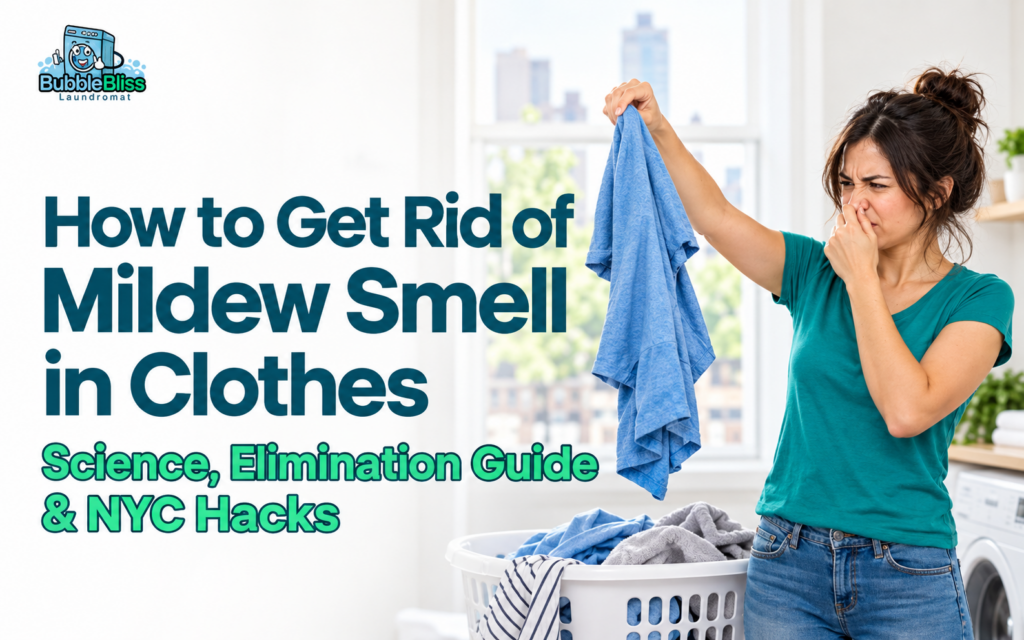
Residents living in urban apartments frequently encounter musty odors when pulling garments from storage or dealing with laundry left in washer drums. Learning how to get rid of mildew smell in clothes requires understanding the underlying biological and chemical triggers rather than relying solely on masking fragrances. Fungal spores proliferate rapidly in damp environments, producing microbial volatile organic compounds that bond securely to textile fibers. Resolving this issue involves inspecting fabric care labels, rewashing garments with appropriate oxidative agents, drying items completely, and remediating household moisture sources.
Why Clothes Develop a Mildew Smell
Textiles develop unpleasant odors when ambient moisture interacts with organic residues and fungal spores. Damp storage conditions and delayed drying cycles provide the primary catalyst for microbial proliferation. Fungal colonies feed on residual body oils and detergent films trapped within textile weaves. When clothes sit undisturbed in unventilated spaces, microscopic organisms synthesize volatile organic compounds that register as a stale odor.
Many residents encounter this issue after discovering clothes left in washer overnight. Closed washing machine drums trap residual water and humidity, creating an incubator for spore germination within twenty-four to thirty-six hours.
Similarly, individuals often search for methods on how to remove damp smell from clothing when garments absorb ambient moisture in humid environments. A musty smell does not establish one specific fungal species or single root cause. Multiple factors contribute to odor retention, including improper detergent measurement, machine drum biofilm accumulation, and restricted household airflow. Relying on heavy fragrances or scent boosters only covers the active molecules temporarily. Masking agents fail to destroy the underlying fungal hyphae or degrade the organic compounds responsible for the persistent odor.
How to Get Rid of Mildew Smell in Clothes
Restoring freshness to odor-impaired textiles requires a systematic decontamination protocol. Standard washing cycles using cold water and routine detergent frequently fail to eradicate embedded fungal spores or strip stubborn soap scum.
Check the Fabric Care Label
Garment classification dictates the appropriate cleaning temperature, agitation level, and chemical treatment. Cotton items tolerate higher thermal thresholds, whereas synthetic activewear and delicate silk require low-temperature maintenance to prevent fiber degradation. Professional assessment is recommended for structured garments or vintage textiles that cannot withstand standard laundering procedures.
Table 1: Fabric Care Comparison outlines suitable starting approaches and precautions for various textile categories.
| Fabric type | Suitable starting approach | Precautions |
| Cotton Towels & Linens | Hot water wash with oxygen bleach booster | Avoid high-heat drying until all spores are eradicated |
| Synthetic Activewear | Warm water wash with enzyme-based detergent | Avoid fabric softeners that trap hydrophobic residues |
| Wool & Animal Fibers | Cold water wash with specialized wool detergent | Avoid alkaline sodium percarbonate that damages fibers |
| Delicates & Silk | Cool hand wash or professional wet cleaning | Avoid aggressive mechanical agitation and high heat |
Rewash With the Correct Detergent Amount
Overloading washing machines or using excessive detergent creates a sticky residue film that harbors bacteria and fungi. When garments emerge smelling sour, clothes smell musty after washing because organic soil and detergent residue remain trapped in the fabric weave. Operators must measure high-efficiency detergent accurately based on load size and water hardness. Running the wash cycle at the warmest temperature permitted by the garment care label helps dissolve body oils and loosen trapped residues.
Use Oxygen Bleach When Suitable
Oxygen-based bleach utilizes sodium percarbonate to release active oxygen radicals when dissolved in warm or hot water. This chemical action breaks down organic compounds and degrades fungal cell walls without weakening cotton fibers like chlorine bleach. Users must verify product labels and test fabric colorfastness before applying oxygen treatments. For safe handling practices and hygiene management, references such as the CDC guidance on safe mold cleanup provide valuable context on managing fungal allergens in domestic environments. This process provides effective stain and odor remediation without promising complete sterilization or spore annihilation.
Consider White Vinegar Only Where Permitted
Distilled white vinegar serves as an optional rinse-cycle additive to neutralize alkaline detergent residues and dissolve soap scum. Acetic acid lowers wash water pH, helping to eliminate residual odors trapped in textile weaves. Vinegar is not a universal disinfectant, nor is it recommended by all washing machine manufacturers for continuous use on rubber internal components. Appliance manufacturers advise checking equipment guidance regarding vinegar compatibility.
Important Safety Precaution: Never mix chlorine bleach with vinegar, ammonia, or other household cleaning agents. Combining these chemicals releases toxic gases. Users must never combine laundry treatments unless product instructions explicitly permit mixing.
Dry Completely Before Storage
Transferring wet laundry to the drying apparatus immediately after the wash cycle prevents secondary moisture accumulation. Utilizing dryer settings specified on fabric care labels ensures complete moisture removal. When line drying or using indoor racks, garments require adequate spacing and sufficient room ventilation to accelerate evaporation.
When laundry smells after drying, lingering dampness indicates insufficient thermal duration, restricted airflow, or high ambient humidity in the drying environment.
Table 2 details the sequential steps required for effective home laundry remediation.
| Step | Action | Key precaution |
| Step 1 | Sort textiles by care label specifications | Separate cottons from synthetics and delicates |
| Step 2 | Pre-soak in oxygen bleach solution | Verify fabric compatibility before hot water immersion |
| Step 3 | Wash with measured high-efficiency detergent | Avoid overloading to ensure proper water agitation |
| Step 4 | Execute complete drying cycle | Ensure 100% moisture removal before folding or storage |
Clean the Washer to Prevent Recurring Odors
A washing machine that harbors internal biofilm will transfer fungal spores to every subsequent laundry load. Front-load washing machines require dedicated maintenance to prevent musty odors.
Operators must inspect rubber door gasket folds and detergent dispenser drawers regularly. Visible residue, hair, and detergent scum must be removed using warm water and a soft brush in accordance with manufacturer instructions. Running a monthly maintenance cycle with an approved washing machine cleaner or hot water setting eliminates hidden mold inside the drum.
After every wash cycle, components must be left open to dry and ventilate properly. Persistent drainage problems or standing water inside the lower pump filter require immediate inspection and clearing to eliminate stagnant water sources.
Prevent Musty Clothes in NYC Apartments
Urban apartment living introduces unique environmental challenges. Compact floor plans, shared building structures, and restricted natural ventilation create conditions where moisture management requires deliberate attention.
Improve Closet Airflow and Manage Humidity
Cramming garments tightly into dark storage spaces restricts air circulation and traps ambient humidity. When clothes smell musty in closet environments, high relative humidity has allowed fungal spores to proliferate on textile surfaces. According to the EPA guidance on indoor humidity, maintaining indoor relative humidity below 60 percent is essential for discouraging mold growth. Apartment residents can utilize hygrometers to monitor closet conditions, space clothing hangers apart to permit airflow, and operate small electric dehumidifiers in persistently damp rooms.
Use Drying Racks Safely
Apartment residents frequently rely on indoor drying racks due to limited outdoor drying space. Garments placed on racks require adequate spacing and positioning near circulating air currents.
Residents must follow building management and heating-equipment guidelines when managing indoor drying spaces. Placing damp garments directly on hot steam radiators is discouraged. Excessive surface heat can bake unremoved fungal proteins into textile fibers and cause thermal contraction shrinkage in natural fabrics.
Compare DIY Laundry With Professional Help
Managing musty laundry loads manually involves significant time expenditure and chemical overhead. When repeated rewashing, bulky bedding items, or limited apartment drying space create persistent challenges, professional service provides a practical alternative.
Table 3 compares home DIY remediation with professional service parameters.
| Remediation Method Stage | Standard Home Re-Wash | Specialized Multi-Stage DIY | Bubble Bliss Professional Valet |
| Spore Decontamination Setup | Direct detergent wash | Two-hour oxygen pre-soak | Professional sorting and enzymatic soak |
| Main Wash Phase | Cold or warm tap cycle | Hot wash with oxygen booster | Controlled hydro-oxidation cycle |
| Acidic Souring Rinse | Tap water rinse | Distilled vinegar rinse | Precision pH organic souring rinse |
| Drying & Airflow | Indoor rack or radiator | Fan-assisted drying | Forced-air sensor drying chambers |
| Total Turnaround Time | Three hours | Fourteen hours | 24-hour doorstep return |
Table 4 outlines the time investment and influencing factors associated with household laundry management.
| Task | Active or elapsed time | What affects it |
| Pre-treating and Soaking | 30 to 60 minutes active time | Severity of odor and fabric type |
| Washing and Machine Cycles | 45 to 90 minutes elapsed time | Machine settings and load capacity |
| Drying and Moisture Extraction | 60 to 180 minutes elapsed time | Ambient humidity and fabric weight |
| Folding and Storage | 30 to 45 minutes active time | Total volume and garment structure |
Note: Time and effort figures are illustrative examples based on average household laundering tasks.
Frequently Asked Questions
How do you get mildew smell out of clothes?
To get rid of mildew smell, soak clothes in hot water with sodium percarbonate oxygen bleach for sixty minutes to destroy fungal hyphae. Follow with a warm detergent wash and add one cup of distilled white vinegar to the final rinse cycle to neutralize odor-causing volatile organic compounds and strip soap scum.
Why do my clothes smell musty after washing them?
Clothes smell musty after washing because fungal spores or soap scum biofilms linger inside washing machine drum gaskets. Additionally, overloading machines prevents complete water flushing, leaving organic body oils behind. When damp clothes sit in unventilated washers or dark closets, dormant spores reactivate, synthesizing sour volatile organic compound odors.
How long can clothes stay in the washer before mildew grows?
Clothes left in a closed washing machine drum begin growing mildew and generating volatile organic compounds within twenty four to thirty six hours at room temperature. High ambient humidity or warm summer weather accelerates fungal germination. Re-wash garments immediately with oxygen bleach if left in the washer overnight to stop spore propagation.
Does vinegar or baking soda kill mildew smell better?
Both work sequentially. Sodium percarbonate or baking soda provides alkaline oxidation to break down fungal hyphae during the main wash cycle. Distilled white vinegar acts as an acidic souring agent in the rinse cycle, neutralizing residual wash alkalinity, dissolving soap scum barriers, and eliminating stubborn musty damp odors completely.
Can steam radiators get rid of mildew smell in damp clothes?
No. Hanging damp, musty clothes over hot steam radiators exceeding one hundred fifty degrees Fahrenheit causes intense thermal setting. High localized heat bakes unremoved fungal proteins deep into textile fibers and fills small apartments with volatilized organic vapors, while causing thermal contraction shrinkage across cotton garments.
How do you get musty smells out of clothes stored in NYC closets?
Remove musty closet odors by washing garments with an oxygen bleach booster and a vinegar rinse. To prevent regrowth in dark, unventilated apartment closets, space clothing hangers apart to improve airflow circulation, run a closet dehumidifier, and ensure items are one hundred percent dry before storing them away.
Does fabric softener make mildew smells worse on towels?
Yes. Fabric softeners coat cotton terry loops in a hydrophobic layer of quaternary ammonium compounds. This film traps dampness and fungal spores underneath, reducing water absorbency by up to forty five percent and accelerating sour mildew odor recurrence every time towels get wet during routine bath usage.
How does Bubble Bliss eliminate persistent mildew smells from laundry?
Bubble Bliss eliminates stubborn mildew odors using professional multi-stage wash protocols, high-temperature oxygen oxidation, and acidic souring rinses. Our commercial drying chambers extract all residual moisture, returning your laundry completely fresh and neatly folded with guaranteed twenty four hour doorstep valet delivery across New York City.
Keep Clothes Fresh With Better Washing and Drying
Maintaining odor-free textiles requires consistent attention to washing parameters, complete drying cycles, and proactive machine maintenance. Knowing how to get rid of mildew smell in clothes protects garment longevity and indoor air quality. By measuring detergent accurately, utilizing oxygen bleach treatments, wiping down washing machine gaskets, and controlling indoor humidity, urban residents can prevent musty odors from recurring.
Total Mildew Elimination: Bubble Bliss NYC Laundry Valet
When stubborn odors or busy schedules make home laundering difficult, expert assistance is available. Bubble Bliss Laundromat provides a specialized NYC wash and fold service engineered to eliminate deeply embedded mildew and musty damp odors. Our professional facility utilizes controlled hydro-oxidation cycles, organic acid souring rinses, and high-CFM sensor drying technology to restore fabric freshness completely. Take advantage of our convenient laundry pickup and delivery service across New York City and schedule your doorstep pickup today.