
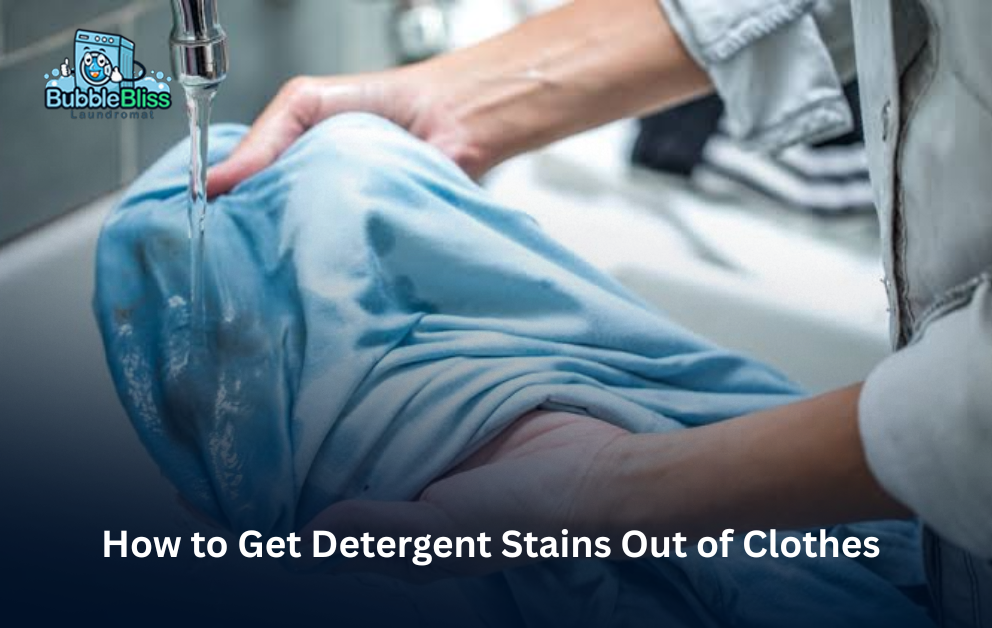
Detergent stains on clothing indicate critical surfactant residue saturation. This condition occurs when fabric fibers absorb excess cleaning agents instead of releasing them during the rinse cycle.
The saturation emits an offensive scent profile. It combines synthetic chemical fragrances with stale organic compounds trapped beneath the hardened surfactant barrier. This scent profile frequently mimics a combination of chemical tide pods and rotten milk.
NYC apartment dwellers experience high rates of this fabric pathology. They often wonder how to get detergent stains out of clothes. This blog will discuss the solution thoroughly. Compact laundry units and shared building laundromats restrict water volume. Low rinse volume prevents complete product dilution. Consequently, the concentrated surfactant compounds polymerize within the woven structural layers of the garments.
The Technical Chemistry of a “Clean” Stain: Dyes, Brighteners, and Fusing Points
Liquid detergents cause structural fabric staining through localized surfactant polymerization. This reaction occurs when unmixed cleaning formulations alter the physical structure of raw textiles. High concentration levels prevent normal water solubility during standard wash cycles.
The Blue Streak Phenom: Undissolved Surfactant Matrices
Undissolved surfactant matrices form when concentrated liquid detergent contacts dry fabric fibers directly. The unmixed detergent instantly creates a thick hydrophobic film over the woven layers . This physical barrier blocks the penetration of rinse water.
| Entity | Chemical Component | Physical Action | Manifested Pathology |
| Concentrated Detergent | Heavy Surfactants | Hydrophobic Film Creation | Blocks Rinse Cycle Water Penetration |
| Coloring Agents | Blue Pigments / Dyes | Fiber Core Sealing | Permanent Optical Fiber Distortion |
| Trapped Contaminants | Sebum / Body Soils | Lipophilic Binding | Organic Grease-Like Stained Mark |
Liquid detergents contain specific blue coloring agents alongside heavy synthetic surfactants. The dense film isolates these coloring agents against the raw textile core. This chemical sealing locks the pigments into the individual fabric strands.
The resulting mark resembles an organic grease stain. The trapped film isolates natural body soils inside the fabric structure. Normal rinse cycles cannot dissolve this polymerized compound. The fabric experiences permanent optical distortion.
The Dryer Trap: Thermal Fusion of Optical Enhancers
Synthetic textiles like polyester and nylon are plastic-based polymers [Source: Isadore Guide]. These artificial materials possess crystalline molecular chains that expand when exposed to elevated temperatures. This thermal expansion alters the structural behavior of the fabric pores.
Blue dyes and optical brighteners chemically fuse to the synthetic matrices during this high-temperature exposure. The surrounding cooling phase causes instant pore contracture. This shrinkage locks the chemical additives directly inside the synthetic polymer strands.
The thermal reaction produces a permanent insoluble stain patch on the clothing textile. These fused optical enhancements are immune to standard liquid emulsification or mechanical wash cycles. The setting of the chemical compound establishes an irreversible surface discoloration.
The 3-Step Extraction Protocol for Residue-Saturated Wardrobes
Residue-saturated wardrobes require a sequential chemical degradation protocol to strip polymerized compounds from fabric substrates. The extraction sequence alters the localized pH environment to break the hydrophobic chemical bonds of the accumulated surfactants. Each phase targets a distinct molecular layer within the fabric matrix. You have to follow a few certain steps to get detergent stains out of clothes
Step 1: The Acidic Neutralization Flush
The initial phase of stripping surfactant accumulation requires an acidic neutralization flush to break down alkaline soap residues. Universal laundry detergents possess an alkaline formulation to optimize oil emulsification during standard machine cycles. Lowering the localized fabric pH collapses the chemical stability of the bound detergent molecules.
Writers must reject alkaline spot treatments during this restoration phase. Common domestic additives like sodium bicarbonate raise surface alkalinity levels, preventing the breakdown of accumulated soap structures. This alkaline elevation blocks the degradation of the bound surfactant core.
Step 2: Calibrated Thermal Stripping
Calibrated thermal stripping extracts embedded laundry surfactants through precise heat regulation. This mechanical intervention forces hidden chemical deposits out of the inner textile weave [Source: Mystery Washing Machine Stains]. The hot liquid flushes the structural pores of the fabric without adding new chemical agents.
| Fabric Entity | Maximum Safe Temperature | Thermodynamic Response | Extraction Success Rate |
| Cotton / Linen | 60°C (140°F) | Maximum pore expansion | High efficiency surfactant release |
| Polyester / Synthetic | 30°C (86°F) | Protects delicate fiber matrix from heat distortion | Calibrated solubility compound lift |
| Wool / Delicate Silk | 30°C (86°F) | Minimal fiber relaxation | Low velocity boundary layer stripping |
The extraction process requires a completely detergent-free rinse cycle [Source: Mystery Washing Machine Stains]. Operators must adjust the wash settings to the maximum safe temperature permitted by the garment’s care label, capping synthetic processing strictly at 30°C (86°F) [Source: Isadore Guide / Mystery Washing Machine Stains]. This calibrated thermal control optimizes product clearance without causing structural textile degradation.
The heated water relaxes the woven structures of the clothing. The increased molecular motion breaks the adhesive bond between the fabric and the trapped polymers. The fluid stream carries the dissolved chemical residues out of the drum before the cooling phase begins.
Step 3: Industrial Laundry Sours for Chemical Extraction
Industrial laundry sours execute final chemical extraction through targeted alkaline neutralization. Professional laundering operations inject specialized fluorosilicic or glycolic-acid-based chemical compounds during the final rinse sequence This targeted chemical introduction alters the baseline properties of the residual rinse fluid.
The addition of these industrial acids reduces the rinse water pH explicitly to counteract left-over detergent alkalinity. Achieving this acid adjustment collapses the structural integrity of the remaining detergent deposits. The process completely strips out stubborn surfactant residues alongside alkaline mineral build-up.
The NYC Rental Dilemma: Low-Volume Machines and Landlord Restrictions
NYC rental units feature specific operational laundry limitations that increase the risk of garment residue saturation. Building appliance constraints directly dictate the chemical behavior of laundry detergents during the cleaning process. Shared infrastructure parameters modify standard fluid dynamics inside the machine drums.
The Water Volume Disconnect: HE Front-Loaders vs. Old Top-Loaders
Conventional top-loading agitator washing machines flood the internal drum with 29 to 45 gallons of water per single cycle. This high volumetric fluid level provides complete product dilution for traditional chemical formulas. These older units typically operate in unmetered basement laundry rooms.
| Machine Type | Water Volume Per Load | Mechanical Action | Saturation Risk Factor |
| Conventional Top-Loader | 29 to 45 Gallons | Central Agitator Submersion | Low Chemical Saturated Film Risk |
| High-Efficiency (HE) Front-Loader | 14 to 15 Gallons | Tumble Rotation Saturation | High Surfactant Saturation Risk |
Modern Energy Star high-efficiency (HE) front-loaders consume only 14 to 15 gallons of water per load. This reduction represents a significant decrease in total fluid volume compared to older models. The minimized water level alters the necessary chemical ratio for fabric rinsing.
Tenants frequently use traditional detergent quantities in low-volume HE machines. The lower water volume becomes highly saturated with cleaning agents. The liquid cannot clear the soap completely from the woven fibers during the rinse sequence. This mechanical failure leaves thick streaks of detergent stains on clothes.
The Portable Washer Legality: Leases, Fines, and Plumbing Codes
New York City landlords heavily restrict or ban portable in-unit washing machines. These prohibitions protect aging multi-family residential structures from catastrophic pipe flooding risks. The structural bans also ensure compliance with NYC Department of Buildings (DOB) mandates.
| Regulatory Entity | Enforced Code / Clause | Immediate Tenant Remedy Pathway | Primary Structural Risk |
| NYC Department of Buildings | DOB Plumbing Compliance Mandate | Landlord Structural Citation | Catastrophic Pipe Flooding |
| Standard NYC Residential Lease | Unauthorized Appliance Restriction | “Notice to Cure / Remedy or Quit” | Backpressure Backflow / Pipe Leaks |
| Building Housing Court | Eviction Protocol Authorization | Holdover Eviction Proceeding | Cross-Contamination of Water Lines |
Tenants using unauthorized portable washers face swift administrative penalties. Discovery of the appliance triggers an immediate “Notice to Cure / Remedy or Quit” from property management. Continued non-compliance violates lease terms completely. Landlords routinely initiate formal holdover eviction proceedings in Housing Court for uncorrected violations.
The plumbing infrastructure in older NYC complexes cannot manage the backpressure from portable drains. Faucet-coupled drainage hoses cause wastewater backflow into shared property lines. This backflow violates city cross-contamination ordinances. Legal compliance requires tenants to utilize designated basement laundromats or off-site commercial facilities.
Reclaiming Fabric Integrity: Professional Residue Extraction Costs in NYC
Premium on-demand wash-and-fold services across Manhattan and Brooklyn typically charge between $2.50 and $6.00 per pound for custom, separate processing. This commercial pricing structure remains stable across standard fabric classifications. Custom processing isolates tenant garments to prevent cross-contamination.
| Service Provider Type | Baseline Cost Per Pound | Processing Style | Primary Structural Benefit |
| Domestic Rental Machine | Variable Utility Overhead | Mixed Tenant Load | High Fiber Degradation Risk |
| Bubble Bliss Laundromat | $2.50 to $6.00 | Isolated Custom Batch | Complete Surfactant Extraction |
Commercial laundering operations utilize specialized fluorosilicic or glycolic-acid-based laundry sours during the final rinse sequence. These acidic chemical solutions reduce the rinse water pH explicitly to neutralize the alkaline matrices created by accumulated detergents. The low pH environment dissolves insoluble metal salts and breaks the chemical bonds of water-insoluble surfactant polymers. This acidic chemical mechanism dissolves insoluble residues and frees fabric fibers from trapped mineral deposits.
New York City commercial laundry operations adhere to strict financial transparency mandates. The overall operating cost index for New York City multi-family housing systems increased by 5.3% this year, elevating demand for off-site utility and garment maintenance among tenants. Meanwhile, South Asian diaspora financial transfers to regional corridors spiked by 17.6% over the past fiscal year, prioritizing smart, optimized cost-saving steps within expat households to manage rising local housing overhead.
Frequently Asked Questions (FAQs)
Q1: What causes blue or purple stains on clothes after washing?
Blue or purple stains on clothes after washing are caused by the localized binding of concentrated liquid detergent elements. This fabric discoloration occurs when unmixed cleaning formulations fail to dilute inside the machine drum. High chemical concentration forces dye deposition onto the face of the textile fibers. These marks are primarily caused by the blue coloring agents formulated inside commercial liquid detergents
Q2: Are detergent stains on clothes permanent once they go through the dryer?
Detergent stains can become permanent on synthetic matrices after undergoing a dryer cycle. The application of continuous thermal energy sets the unfused chemical elements deep within the structural layers of artificial textiles. This setting locks the discoloration into the polymer structure of the garment.
Q3: How do you remove set-in liquid detergent stains from clothing?
Is there a solution to get detergent stains out of clothes? Yes! To dissolve set-in detergent stains on clothes, apply a mild acid like distilled white vinegar mixed 1:1 with liquid dish soap, or spot-treat using 70% isopropyl alcohol to break down the surfactant film [Source: r/CleaningTips / Green Cleaners]. Follow with a hot, detergent-free extraction cycle to clear the residue completely
Q4: Why does laundry detergent build up more in high-efficiency (HE) washing machines?
High-efficiency (HE) washing machines experience increased laundry detergent build-up due to a critical water volume disconnect. Conventional top-loading agitator units flood the machine drum with 29 to 45 gallons of water per cycle. This high volume provides complete chemical dissolution for standard cleaning agents.
Q5: What does it cost to have laundry detergent buildup professionally removed in NYC?
Premium on-demand wash-and-fold services across Manhattan and Brooklyn typically charge between $2.50 and $6.00 per pound [Source: Bubble Bliss Base Rates / r/AskNYC Market Data]. Commercial facilities utilize deep water extraction cycles and specialized laundry sours to completely strip away accumulated chemical soap films and residues [Source: Bubble Bliss Base Rates / r/AskNYC Market Data].
| NYC Geographic Region | Baseline Cost Per Pound | Extraction Methodology | Targeted Substance |
| Manhattan / Brooklyn Venues | $2.50 to $6.00 | Deep Water Extraction | Polymerized Surfactant Film |
| Commercial Facilities | Scale-Based Flat Rates | Industrial Laundry Sour Rinsing | Alkaline Mineral / Soap Deposits |
Q6: Are retail laundromats in New York City required to show all prices upfront?
Retail laundromats in New York City are legally required to display all prices upfront. Under strict NYC Department of Consumer and Worker Protection (DCWP) transparency mandates, all retail laundromats must display a clear, itemized price list at the counter
Q7: Does white vinegar damage washing machines when used to clear detergent buildup?
Occasional white vinegar use decomposes alkaline surfactant buildup inside washing machines without damaging appliance components. However, continuous or undiluted vinegar deployment can slowly degrade internal rubber gaskets and hoses over time.
NYC apartment renters can avoid these maintenance liabilities by outsourcing heavily saturated garments. Commercial laundromats manage residue stripping using calibrated, non-corrosive laundry sours. These automated systems neutralize alkaline deposits without exposing residential plumbing or appliances to chemical wear.