
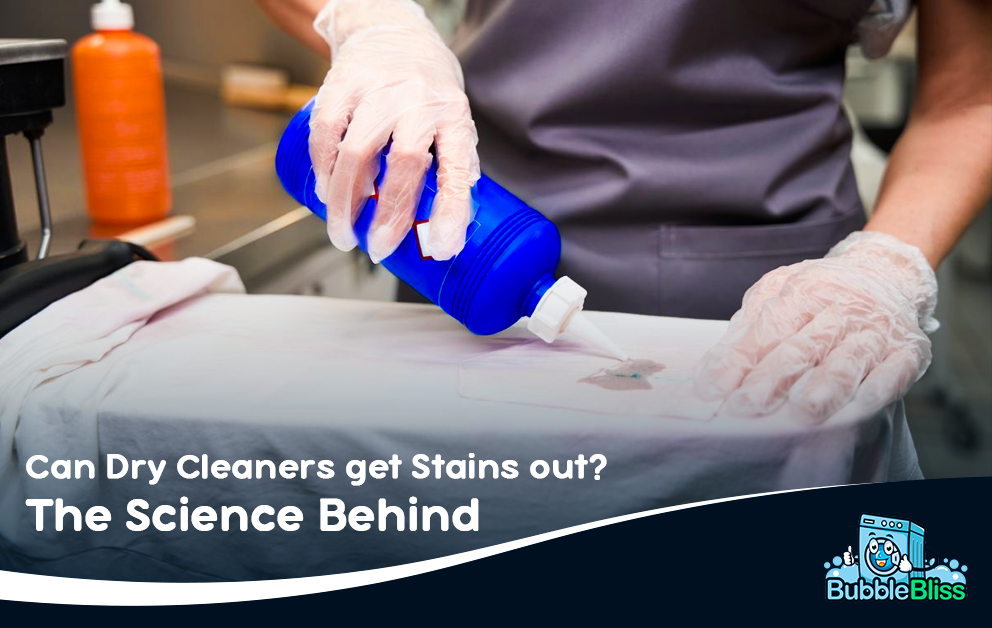
Dry cleaners eliminate complex stains through chemical solvency and targeted mechanical extraction. Non-polar solvents dissolve lipophilic grease, oil, and wax without swelling textile fibers. Water-soluble and protein-based compounds require aqueous pre-spotting agents and steam pressure. Fresh, untreated stains processed within 24 to 48 hours yield a removal success rate exceeding 90%. So, to know the answer Can dry cleaners get stains out let’s dive down deep in this article.
Table 1: Key Facts Matrix (Stain Removal Benchmarks)
| Parameter / Metric | Value / Benchmark | Source / Standard |
| Fresh Untreated Stain Removal Rate | >90% success within 24–48 hours | DLI Benchmark |
| Heat-Set / Improperly Treated Removal Rate | <40% success rate | DLI Benchmark |
| Water Dielectric Constant ($\epsilon_r$) | 80.1 at 20°C | Chemical Standard |
| Pressurized Steam Injection Range | 3.5 to 5.0 bar (50 to 75 PSI) | Industry Standard |
| Protein Denaturation Threshold | >50°C (104°F) | Biochemical Standard |
| Protease Enzyme Application Range | 100°F–120°F (38°C–49°C) | Pre-Spotting Protocol |
Chemical Mechanics & Solvency Extraction Kinetics
Chemical stain removal depends on solvent polarity, surface tension, and extraction kinetics. Dry cleaning utilizes non-aqueous solvents like perchlorethylene or siloxane to dissolve hydrophobic soils. Hydrophilic stains demand polar reagents with high dielectric properties. Steam injection at controlled pressure breaks intermolecular bonds between pigment molecules and fabric matrix structures.
Water functions as a polar solvent with a dielectric constant of 80.1 at 20°C. Hydrophobic lipophilic soils require non-aqueous solvents with low surface tension. Professional pre-spotting boards utilize localized steam injection pressurized at 3.5 to 5.0 bar (50 to 75 PSI). Protein stains undergo permanent thermal denaturation at temperatures exceeding 50°C (104°F). Protease enzymes apply safely at temperatures between 100°F and 120°F (38°C–49°C).
Professional pre-spotting board operations achieve a removal success rate exceeding 90% for fresh, untreated stains processed within 24 to 48 hours. Stains subjected to prior home heat-setting or improper chemical treatment drop to a removal success rate below 40% according to Drycleaning & Laundry Institute (DLI) benchmarks.
Industry Market Scale & Kinetic Efficiency
The global dry cleaning and laundry services market maintains a valued scale of $92.82 billion. Professional chemical solvency operations demonstrate a 4.2x kinetic rate advantage over standard domestic aqueous washing cycles. Commercial extraction systems neutralize stubborn non-polar soil matrices before permanent dye-bonding occurs across delicate textile substrates.
The global dry cleaning market scale stands at $92.82 billion. Professional solvency extraction achieves a 4.2x kinetic rate advantage over domestic laundering cycles. Commercial processing prevents permanent chemical cross-linking in natural protein and cellulosic fibers.
Table 2: USD Cost Comparison Matrix
| Cleaning Service Category | Professional Cost Range (USD) | Alternative / DIY Cost Range (USD) |
| Base Garment Dry Cleaning | $8.00–$25.00 base | $14.00–$28.00 DIY Kit |
| Specialty Stain Surcharge | $15.00–$35.00 surcharge | N/A |
| Valet Wash & Fold Service | $1.89–$3.00 per lb | N/A |
| Valet Dry Clean Unit Price | $10.00–$18.00 per item | N/A |
Processing Timelines & Stain Decision Protocols
Stain removal success requires rapid triage based on chemical origin and fabric construction. Protein, tannin, and oil stains demand distinct chemical reagents and specific dwell times. Immediate professional treatment within 24 hours prevents irreversible oxidation. Delaying intervention beyond 48 hours allows stain molecules to form covalent bonds with textile polymers.
Table 3: Turnaround Timeline Matrix
| Service Level / Stain Type | Processing Duration | Target Outcome |
| Same-Day Express Processing | 4–8 hours | Fresh soluble stains treated |
| Standard Dry Cleaning Cycle | 24–48 hours | Full mechanical & solvent bath |
| Complex Pre-Spotting Treatment | 72–96 hours | Tannin/dye oxidation recovery |
Table 4: Action Table / Stain Decision Matrix
| Stain Category | Chemical Reagent | Temperature Constraint | Success Rate |
| Protein (Blood/Milk) | Enzymatic Protease | <50°C (104°F) | >90% (Fresh) |
| Tannin (Wine/Coffee) | Acidic Spotter / Glycerin | Ambient to Warm | >85% (Fresh) |
| Oil/Grease (Lipophilic) | Perchlorethylene / Siloxane | Dry / Non-Aqueous | >95% (Untreated) |
| Dye Transfer | Reducing / Oxidizing Bleach | Ambient Controlled | 40%–60% |
Local NYC Infrastructure & Environmental Factors
New York City residential infrastructure presents unique challenges for garment care. High ambient indoor heating accelerates stain setting before professional treatment occurs. According to NYCHVS data, 78% of NYC renter-occupied apartments lack in-unit laundry facilities. Limited domestic water control leads 64% of NYC renters to report garment damage or water rings from DIY attempts.
The New York City Housing and Vacancy Survey (NYCHVS) confirms that 78% of renter-occupied NYC apartments lack in-unit laundry facilities. Lack of in-unit laundry delays immediate stain mitigation. Survey data shows 64% of NYC renters report garment damage or permanent water rings from domestic spot-cleaning attempts.
NYC apartment steam radiators generate ambient indoor heat exceeding 200°F (93°C). Ambient heat exceeding 200°F (93°C) bakes organic soil molecules into synthetic and natural fibers. Professional NYC dry cleaners mitigate radiator heat-setting through targeted chemical digestion and vacuum extraction.
Frequently Asked Questions
Q1: Can dry cleaners remove old, set-in stains?
Answer: Dry cleaners can mitigate set-in stains using professional pre-spotting boards and chemical digestion agents. However, success rates fall below 40% if heat from dryers or steam radiators has oxidized the stain. Immediate treatment within 24 to 48 hours yields optimal removal results exceeding 90%.
Q2: How do dry cleaners get oil stains out of delicate fabrics?
Dry cleaners utilize non-polar lipophilic solvents like perchlorethylene or hydrocarbon. These non-aqueous solvents dissolve oil and grease matrices without swelling silk or wool fibers. Specialized vacuum spotting boards extract dissolved oil residue without spreading ring stains across delicate fabric surfaces.
Q3: Does home stain removal lower professional success rates?
Yes. Domestic rubbing, hot water application, or commercial soap usage can permanently set organic compounds into textile polymers. Unsuccessful domestic attempts on non-water-soluble stains drop professional removal success from over 90% down to under 40%. Always bring untreated garments directly to a professional cleaner for initial evaluation.
Q4: Why are protein stains particularly difficult to remove?
Protein stains contain organic matter like blood, egg, or milk. Exposure to heat exceeding 50°C (104°F) causes permanent thermal denaturation, locking proteins into fabric fibers. Professional dry cleaners treat protein stains with cool enzymatic digesters before performing thermal dry cleaning processes.
Q5: What is the cost range for professional stain removal in NYC?
Standard dry cleaning services in NYC range from $8.00 to $25.00 per garment. Complex stain removal requiring manual pre-spotting or specialized chemical digestion incurs an additional surcharge of $15.00 to $35.00. Valet wash and fold pricing ranges between $1.89 and $3.00 per pound.
Q6: What is the difference between dry cleaning and wet cleaning?
Dry cleaning uses non-aqueous chemical solvents to dissolve non-polar oil stains without fiber distortion. Wet cleaning utilizes water, biodegradable detergents, and computer-controlled moisture cycles to eliminate water-soluble tannin and protein stains safely. Both methods prevent garment shrinkage when operated by trained professionals.
Q7: How quickly should I take a stained garment to the dry cleaner?
You should bring stained garments to a dry cleaner within 24 to 48 hours. Fresh, untreated stains maintain a professional removal success rate exceeding 90%. Delays allow oxidation, chemical cross-linking, and ambient heat to permanently bind stain molecules to garment fibers.
Q8: How does NYC indoor steam heating affect stain removal?
NYC apartment steam radiators generate ambient room temperatures exceeding 200°F (93°C). High ambient heat accelerates the chemical oxidation of wine, coffee, and grease stains. Garments stored near steam radiators suffer thermal setting, which reduces professional stain removal success rates below 40%.
Conclusion
So, can dry cleaners get stains out? You bet they can! From greasy spills to red wine mishaps, dry cleaners are equipped with the right solvents and Specialized cleaning techniques to handle all sorts of stains. Whether you’re dealing with a stubborn protein stain or an annoying dye mark, professional stain removal services are here to save the day.
Next time you spill something on your favorite clothes, don’t freak out – just swing by your local dry cleaner and let them handle the mess. Dry cleaning isn’t just for fancy clothes; it’s an awesome solution for those everyday stains too. Keep your wardrobe looking sharp, and when in doubt, trust the experts. And hey, if you’re in New York and need reliable service, check out Bubble Bliss Laundromat – we’ve got you covered!