
Fabric softener makes your laundry smell great and feel more comfortable. But there’s a tiny gap between perfect and a sticky mess. Navigating that gap is everything.
Skip the trial and error method. This is your direct route to mastery. Learn how to use fabric softener correctly with our essential washing machine guide and pro fresh laundry tips.
What Is Fabric Softener & How Does It Work?
Think of fabric conditioner as a protective layer for your clothes. This laundry softening agent coats individual fibers during the wash, creating a smooth surface that reduces friction between threads.
Less friction means less stiffness, less static cling, plus it helps lock in fresh scents while blocking odors from settling into the fabric. The coating also makes fibers lie flatter, which is why softened clothes feel silky instead of rough against your skin.
Types of Fabric Softeners
Not all softeners work the same way. Liquid softener goes into your machine’s dispenser during the rinse cycle, making it the most common choice for regular loads. Dryer sheets work differently, you toss them in with wet clothes, then heat activates the softening chemicals as everything tumbles.
Fabric conditioner beads are the newer option: you add them directly to the drum before starting the wash, so they dissolve slowly and release fragrance throughout the entire cycle. Liquid works best for everyday laundry, sheets are ideal for quick softening without machine dispensers, while beads shine when you want long-lasting scent.
How to Use Fabric Softener in a Top-Load Washer
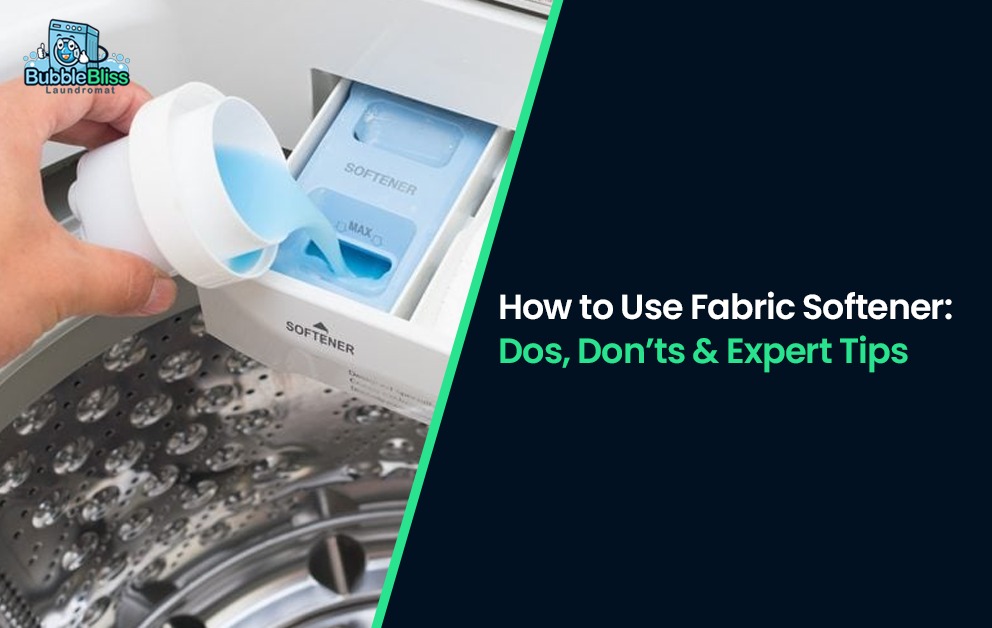
Top-loaders make softening pretty straightforward once you know the steps. First, check your washing machine guide to locate the softener dispenser; it’s usually a small cup in the center agitator or a separate compartment on top. Pour the recommended amount into that dispenser before starting your cycle.
The machine automatically releases it during the rinse phase. Never pour softener directly onto dry clothes because undiluted product leaves permanent stains. If your top-load settings don’t include an auto-dispenser, add softener manually when the rinse cycle begins. Set a timer so you catch that window.
How to Use Fabric Softener in a Front-Load Washer
Front-loaders have a built-in advantage: labeled compartments. Open your detergent drawer& you’ll see sections marked for detergent, bleach, and softener. The softener compartment usually has a flower symbol or says “fabric conditioner.”
Pour your measured softener there before starting the load. The machine holds it until the rinse cycle, then flushes it through automatically. This timing matters because the softener needs to coat fibers after detergent strips away dirt. Clean the detergent drawer monthly to prevent buildup that clogs the softener release. Good machine care keeps everything flowing smoothly.
How Much Fabric Softener Should You Use?
More softener doesn’t equal softer clothes. Check the cap or bottle for softener measurement guidelines—most recommend one to two tablespoons per regular load and adjust based on load size.
Getting laundry ratios right prevents residue on clothes while keeping absorbency intact. Towels, in particular, lose their ability to dry you off when overloaded with softener.
Dos & Don’ts: Quick Reference Guide
Here’s your cheat sheet for smart laundry care; everything you need to know about soft laundry tips on the left, common laundry mistakes to avoid on the right.
| DOS: Best Practices | DON’TS: Mistakes to Avoid |
| Add softener during the rinse cycle only | Never pour softener directly onto dry clothes |
| Dilute thick formulas with water before adding | Don’t use softener on towels |
| Use cold or warm water when possible | Skip softener on activewear and athletic gear |
| Check garment labels before treating | Avoid using on baby clothes or flame-resistant fabrics |
| Measure carefully: 1-2 tablespoons per load | Never overdo the amount; causes residue problems |
| Store bottle upright in a cool spot | Don’t use on synthetic materials like polyester |
| Shake bottle before each use | Avoid adding it with detergent during wash cycle |
| Clean dispenser monthly for machine care | Don’t use on moisture-wicking fabrics |
Following these guidelines protects your wardrobe from fabric damage while keeping everything feeling fresh. Good laundry care means knowing when to use softener—and when to skip it entirely.
Fabrics That Should NOT Use Fabric Softener
Some materials and softener just don’t mix.
Microfiber relies on its unique structure to trap dust and absorb spills—softener fills those tiny spaces, making microfiber useless. Athletic wear uses technical fabrics engineered to pull sweat away from skin; coating them with softener destroys that function.
Wool has natural oils that keep it soft, so synthetic softeners interfere with the fiber’s balance and can cause matting.
Silk is delicate and needs gentle treatment; harsh chemicals in some softeners can break down silk proteins or leave visible spots. Stick to fabric-specific detergents for these items instead.
Eco-Friendly Alternatives to Fabric Softener
Natural softeners work surprisingly well for people avoiding chemicals. Add half a cup of vinegar in laundry during the rinse cycle; it softens fabric, cuts static, and rinses clean without leaving a vinegar smell.
Baking soda laundry tricks also help: mix a quarter cup into your wash cycle to naturally soften water, which makes detergent work better so clothes feel softer.
Wool dryer balls are reusable, chemical-free, and reduce drying time while softening through friction. These options suit sensitive skin, reduce environmental impact, plus they cost way less over time than bottled softener.
How Professional Laundry Services Handle Softening
Professional laundry NYC services like Bubble Bliss take fabric care seriously. We use measured amounts of softener based on fabric type, load size, and customer preferences.
We avoid softener on performance fabrics, towels, or anything that shouldn’t have it. Every load gets individual attention to prevent the common mistakes people make at home. When you want consistently soft, fresh laundry without the guesswork, professional handling makes the difference. Our organic wash options also use plant-based softeners for eco-conscious customers.
FAQs About Fabric Softener
- Does softener cause buildup?
– Yes, using too much creates residue on clothes and inside your machine. Measure correctly to avoid this softener FAQs staple.
- Is it safe for sensitive skin?
– Most formulas contain fragrances and chemicals that irritate sensitive skin. Look for hypoallergenic or fragrance-free versions, or switch to natural alternatives.
- Can you add softener after the wash starts?
– Only if you catch the rinse cycle. Adding it during the wash cycle mixes it with detergent, which cancels out both products. These laundry questions come up often because timing really matters.
- Why do my towels feel waxy?
– Too much softener or using it on towels repeatedly causes that greasy texture. Stop using it on towels entirely so they regain absorbency.
Ending Note
Mastering how to use fabric softener transforms your laundry routine from speculation into competence. Measure carefully, time it right, skip it on the wrong fabrics—these laundry tips keep everything feeling amazing wash after wash.
If you want to avoid the laundry hassle then, Bubble Bliss Laundromat in NYC, handles every detail perfectly, from organic washes to expert softening. We’re located at 224 W 104th Street, open 7am-11pm daily. Let us make laundry day effortless.