
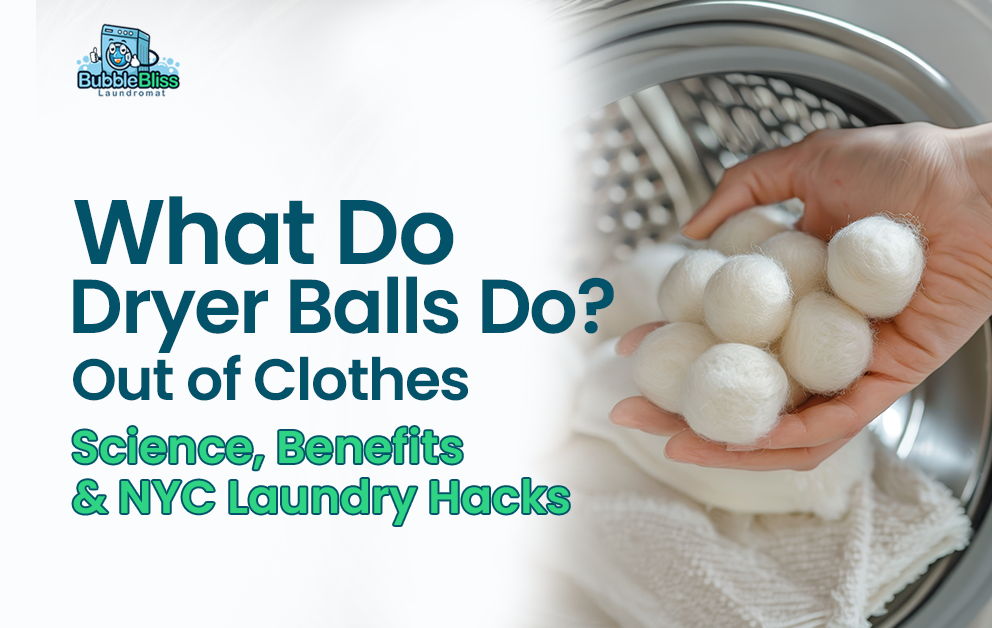
What do dryer balls do when you toss them into your laundry load? These reusable accessories physically separate wet garments as they tumble in the appliance drum, creating continuous air channels that increase airflow circulation, accelerate moisture evaporation, and reduce drying time. Serving as a sustainable alternative to single-use dryer sheets and liquid softeners, wool spheres help soften fabrics through mechanical action rather than chemical coatings. For urban residents managing apartment laundry routines in New York City, understanding these benefits leads to more efficient drying cycles without adding unnecessary utility overhead.
How Do Dryer Balls Work? Separation and Airflow
During a standard tumble drying cycle, heavy wet laundry items naturally stick together, forming dense clusters that trap moisture in the center. Understanding how do dryer balls work reveals their role as physical tumbling dividers that bounce between layers, lifting and separating garments to keep the load open. This mechanical movement prevents the formation of dense fabric rolls and improves the circulation of warm air throughout the drum.
When exploring what are dryer balls used for, you will find they maintain continuous spacing so that convection heat reaches every surface evenly. Rather than relying on chemical additives, this physical movement speeds up the evaporation of trapped water vapour and shortens the total running time required for full dryness. You can read more about these mechanics in Prudent Reviews’ dryer ball testing guide.
Benefits of Dryer Balls and How They Compare
Evaluating laundry accessories involves examining how different products interact with textile fibers, indoor air quality, and ongoing household expenses.
Dryer Balls vs. Dryer Sheets and Fabric Softener
When comparing dryer balls vs dryer sheets, you notice fundamentally different approaches to garment care. Dryer sheets and liquid softeners function by depositing a thin, waxy coating of chemical agents, such as quaternary ammonium compounds, onto clothing fibers. While this film imparts a temporary soft feel and reduces static, it can create significant drawbacks over time. On cotton terry towels and moisture-wicking activewear, chemical residues leave a hydrophobic layer that decreases water absorbency and traps body oils.
In contrast, analyzing dryer balls vs fabric softener reveals that physical spheres operate through mechanics rather than chemical deposition. They soften fabrics by gently flexing the yarn and fiber strands during the tumbling process, preserving the natural absorbency of towels and linens while eliminating the need for single-use paper sheets. For deeper insights into chemical-free alternatives, consult Branch Basics’ guide on dryer sheets.
Wool vs. Plastic Dryer Balls
Choosing between wool vs plastic dryer balls depends on material preferences, appliance noise levels, and maintenance requirements. Dense felted wool balls, typically crafted from pure sheep wool, absorb a portion of ambient moisture during the cycle, which helps dissipate static electricity and keeps the tumbling sound quiet. They are biodegradable and gentle on delicate weaves.
Plastic or rubber dryer balls feature rigid spiked nodules designed for aggressive mechanical agitation. While durable and non-allergenic, hard plastic alternatives tend to create loud thumping noises against appliance drums and lack moisture-absorbing properties. Premium textile care favors quieter wool options that protect garment surfaces from unnecessary mechanical stress.
Dryer Balls and Pet Hair
Pet owners frequently search for laundry solutions to manage shed fur on clothing and household linens. Examining whether do dryer balls help with pet hair shows that felted wool spheres assist in loosening hair through surface friction and static reduction. As wool balls tumble across fabrics, their textured surface helps lift stray cat and dog hair from woven threads, directing the loosened fibers toward the appliance lint trap. However, heavily fur-covered items still require thorough brushing or washing before tumbling. You can review additional details on fur extraction via Fido Fave’s pet hair comparison analysis.
| Option | Main function | Reusable | Main limitation |
| Wool Dryer Balls | Mechanical separation and moisture absorption | Yes (1,000+ loads) | Requires correct load sizing |
| Plastic Dryer Balls | Rigid fiber agitation | Yes (Long-term) | High noise level and rigid impact |
| Dryer Sheets | Chemical coating and static reduction | No (Single-use) | Lowers towel absorbency |
How to Use Dryer Balls and Choose Suitable Fabrics
Proper usage ensures optimal drying performance and protects delicate textiles from excessive wear. Follow these practical steps when preparing your laundry load:
- Determine the appropriate quantity based on your load size, placing three to four balls for medium loads and five to six balls for large bedding or towel loads.
- Toss the balls directly into the tumbler drum alongside your wet garments, ensuring they distribute evenly rather than getting trapped inside folded items.
- Select the correct dryer settings and temperature level recommended on your garment care labels, prioritizing low or medium heat for synthetic blends and knitwear.
- Monitor the drying process and remove garments promptly once the moisture sensor indicates completion to avoid over-drying and static cling.
- Inspect your reusable dryer balls periodically for signs of excessive softening, pilling, or unraveling, replacing them after roughly one thousand cycles or when structural integrity declines.
Adhering to garment care labels remains essential for wool, silk, lace, and technical synthetics. While wool balls are gentle, delicate items benefit from protective mesh wash bags or air drying to prevent snagging during high-speed tumbling.
| Fabric or item | Care-label priority | Dryer-ball consideration |
| Cotton Towels & Bedding | High loop integrity | Use 5-6 wool dryer balls to accelerate drying without flattening pile |
| Synthetic Activewear | Low-heat requirement | Use 3-4 wool dryer balls to prevent elastane fiber heat damage |
| Silk & Fine Delicates | Hand-wash or air dry | Place inside protective mesh bags if tumble drying is permitted |
| Heavy Denim & Fleece | Thorough moisture check | Use 6 wool dryer balls to separate thick layers and prevent damp pockets |
Dryer Balls in NYC Apartments: Practical Considerations
Managing laundry in metropolitan environments involves unique spatial and utility constraints. Many apartment renters operate compact dryers housed within tight utility closets or kitchens. These compact units can experience extended cycle times when heavy garments clump together without mechanical separation aids. Introducing wool dryer balls helps improve internal airflow across smaller drum capacities, promoting more uniform drying.
While optimizing cycle efficiency helps reduce total running time, energy savings depend directly on local electricity tariffs. In urban residential settings, appliance operating costs reflect prevailing utility rates. Reducing overall running time lowers total electricity consumption per load, contributing to efficient household management. Furthermore, because urban apartments often feature thin shared walls, selecting quieter wool balls over hard plastic alternatives prevents disruptive thumping noises during evening laundry routines.
For residents seeking comprehensive laundry solutions without the hassle of home machine maintenance, exploring professional wash-and-fold services offers a convenient alternative.
Frequently Asked Questions About Dryer Balls
What do dryer balls do in the dryer?
Dryer balls separate wet laundry loads as they tumble, allowing hot air to circulate more efficiently between fabric layers. This mechanical separation speeds up moisture evaporation, reduces drying time by up to 30 percent, naturally softens clothes without chemical residues, and reduces static cling by maintaining optimal humidity.
How do dryer balls work to reduce drying time?
Dryer balls function as physical tumbling dividers that lift and separate heavy, clumped garments. By creating continuous air pathways within the tumble dryer, they increase heat convection and airflow velocity. This accelerated moisture transfer allows clothes to dry faster, cutting cycle times and reducing household energy consumption.
Are wool dryer balls better than dryer sheets?
Yes. Wool dryer balls are chemical-free, reusable for over one thousand loads, and naturally soften fabrics without coating fibers. Conversely, dryer sheets release hydrophobic quaternary ammonium compounds that coat cotton terry loops, reducing towel absorbency by up to 45 percent and depositing synthetic fragrance chemicals into indoor living air.
Do dryer balls really work to remove pet hair?
Yes, do dryer balls really work for pet hair removal? As felted wool balls tumble against fabrics, their textured surface creates gentle friction that loosens trapped pet fur and lint. The separated hair is then carried away by the dryer airflow directly into the lint filter.
How many dryer balls should you use per load?
For small to medium laundry loads, using three to four wool dryer balls is ideal. For large or heavy loads, such as bed linens and thick towels, use five to six dryer balls. Using multiple balls ensures sufficient mechanical separation and maximum airflow throughout the tumbling cycle.
What is the difference between wool and plastic dryer balls?
Wool dryer balls are quiet, biodegradable, absorb residual moisture, and do not off-gas chemicals under high heat. Plastic or rubber dryer balls soften fabrics mechanically through spiked nodules, but they generate loud clattering noise in thin-walled apartments and can release volatile organic compounds at high dryer temperatures.
How long do wool dryer balls last?
High-quality one hundred percent wool dryer balls typically last for one thousand or more drying loads, which equals two to three years of regular household laundry use. You know it is time to replace them when the wool fibers begin to unravel, soften excessively, or lose their dense spherical shape. For further appliance care insights, review Sears Home Services’ dryer guidance.
Are dryer balls safe for all fabrics and delicates?
Are dryer balls safe for all fabrics? Wool dryer balls are safe for almost all everyday textiles, including cotton, synthetics, denim, and bed linens. However, for ultra-delicate silk or fine lace garments, it is best to place items inside protective mesh wash bags or air dry them to prevent light surface friction during high-speed tumbling.
Conclusion: A Simpler Approach to Laundry Care
Integrating wool dryer balls into your weekly routine offers an effective method for improving tumble drying efficiency and softening fabrics naturally. By replacing single-use chemical sheets with reusable wool spheres, you protect textile absorbency, eliminate synthetic residues, and shorten cycle times. Selecting the right tools supports sustainable garment care and effortless maintenance, demonstrating clearly what do dryer balls do for everyday households.
Simplify Laundry Day with Bubble Bliss
Managing household laundry in Manhattan can quickly become time-consuming. When you prefer to skip sorting, tumbling, and folding altogether, Bubble Bliss Laundromat provides expert professional care right in our neighborhood. Located at 224 W 104th Street, our facility offers specialized NYC wash-and-fold services designed to keep your wardrobe spotless, soft, and fresh. Enjoy professional processing and dependable turnaround times. Ready to reclaim your weekend? You can schedule a Bubble Bliss laundry valet pickup online today through our secure sign-up page.