
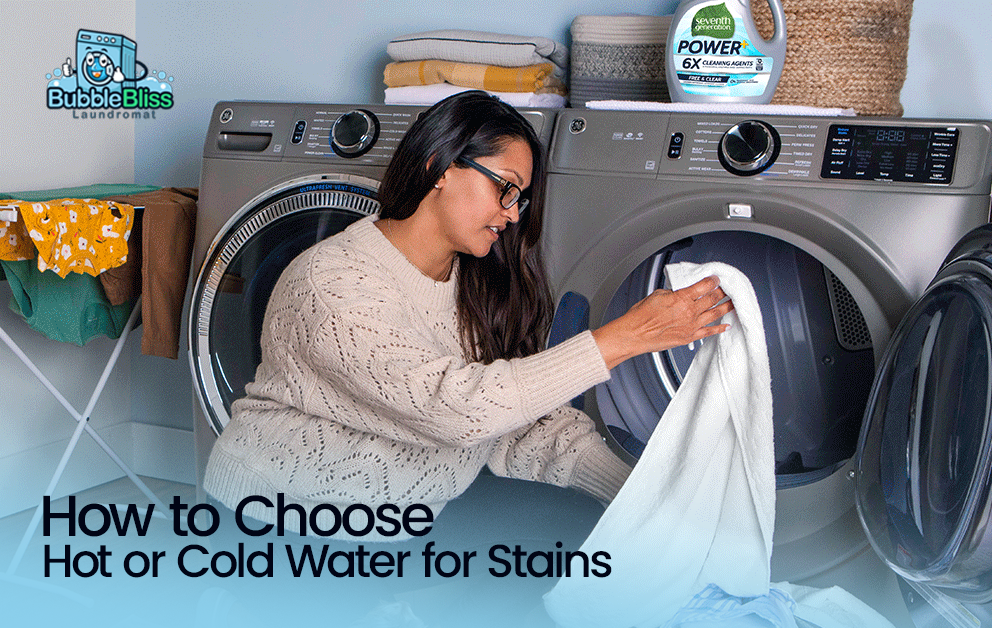
Choosing the incorrect water temperature permanently fuses a stain into fabric fibers. Hot water at or above 40°C / 104°F triggers thermal denaturation on protein-based stains. These stains include blood, sweat, and dairy. This molecular coagulation heat-sets the stain into the fibers. Cold water at or below 30°C / 86°F is mandatory for biological stains. This temperature allows modern cold-active proteases to work without denaturing. A common household mistake is defaulting to hot water for all heavy soils. This mistake frequently ruins garments before they ever reach a professional laundromat.
The Core Rule: Thermal Settings vs. Molecular Dissolution
Every stain falls into one of four chemical families. These families are proteins, organic tannins, lipids, and synthetic pigments. Hot water at or above 40°C / 104°F cooks proteins. The proteins bake into the weave via thermal denaturation and irreversible cross-linking. Cold water at or below 30°C / 86°F keeps molecules soluble without altering the fiber matrix. Modern cold-active proteases require this cold environment to function without degrading.
Key Facts Reference Table
| Stain Classification | Examples | Correct Temperature | Scientific Mechanism |
| Protein-Based | Blood, sweat, milk, eggs, meat juices | Cold Water (≤ 30°C / 86°F) | Prevents macromolecular coagulation and thermal denaturation. Denaturation begins exactly at 40°C / 104°F. |
| Organic Tannins | Coffee, tea, red wine, fruit juices | Warm Water (40°C / 104°F) | Accelerates dissolution of organic compounds by increasing kinetic energy. This avoids reaching the heat-setting threshold for dyes. |
| Lipids & Fats | Cooking oil, butter, makeup, motor grease | Hot Water (≥ 54°C / 130°F) | Exceeds the melting point of standard household triglycerides. This liquefies solid fats to let surfactant micelles entrap the hydrophobic tails. |
| Synthetic / Ink | Ballpoint pen, permanent marker, dye | Cold (20°C / 68°F) | Requires non-polar solvent pretreatments before any aqueous application. Heat permanently bonds the synthetic pigment to the polymer fibers. |
Detailed Water Temperature Matrix for Common Stains
Blood Stain: Hot or Cold Water?
Hot water converts water-soluble ferrous ions in fresh blood into insoluble ferric ion-protein complexes. This reaction creates an irreversible chemical bond with cotton cellulose. You must apply an initial cold flush at or below 30°C / 86°F. This safely dissolves the ferrous ions before applying detergent. Panic washing blood with hot water ruins garments permanently.
Oil Stains: Hot or Cold Water?
Cold water is completely ineffective at lifting hydrophobic lipids. The water temperature must cross the specific household triglyceride melting threshold at or above 54°C / 130°F. Below this temperature, the fat remains a viscous solid. This state makes it physically impossible for surfactant micelles to penetrate the surface tension.
Sweat and Tannin Stains
Sweat is a combination stain containing both proteins and minerals. A warm pre-soak at exactly 40°C / 104°F is required. This temperature relaxes the fabric’s polymer weave without heat-setting the proteins. Optimal extraction requires a targeted multi-enzyme treatment. Protease breaks down the protein. DNase I breaks down the sticky eDNA biofilm from the skin’s microbiome. Standard “Free & Clear” detergents routinely fail on sweat stains. You must use DNase-formulated sport detergents for complete odor extraction from activewear.
Detailed Stain-Removal Processes Step-by-Step
- Identify and Isolate: Determine the category of the stain. Review the manufacturer’s textile care code. If the tag reads ‘X’, you must apply zero liquid solutions. Introducing water to an ‘X’ garment causes immediate dimensional shrinkage and irreversible fiber distortion.
- Blot, Never Rub: Use a clean, lint-free white microfiber cloth. Extract excess liquid from the outside of the stain boundary inward. Rubbing induces fibrillation. Fibrillation permanently
drives hydrophobic soil particles deep inside the polymer matrix.
- Flush from the Reverse Side: Turn the fabric inside out. Flush the area with water of the correct target temperature. Flushing from the back pushes the stain out of the fiber matrix. Use 30°C / 86°F or lower for proteins to prevent coagulation. Use 54°C / 130°F or higher for lipids to melt triglycerides.
- Apply Targeted Surfactant: Apply a calibrated enzyme detergent or a specialized solvent. Let the solution sit undisturbed for exactly 15 minutes. Less time prevents the enzymes from fully cleaving the bonds. Exceeding 30 minutes with highly concentrated protease begins to degrade delicate natural animal fibers.
- Execute Cycle & Inspect: Wash the garment in the washing machine at the recommended maximum safe temperature. Inspect the fabric visually while the garment is still wet. Modern tumble dryers regularly exceed 55°C (135°F). Dryer heat bakes residual organic matter into a permanent polymer cross-link. This renders the stain immune to future chemical treatments. Repeat the entire process if any trace remains.
The Impact of NYC Water Hardness on Laundry Settings
New York City’s water supply is classified as exceptionally soft. The official hardness index is approximately 1.5 grains per gallon (gpg), or 27 parts per million (ppm). Soft water lacks the high calcium and magnesium ions found in hard-water states. NYC residents require significantly less detergent to create a high-performance lather. This softness allows NYC residents to successfully use cold-water cycles at or below 30°C / 86°F to lift stains. In hard-water areas, this would result in poor cleaning due to mineral interference.
The “Soft Water Suds Trap” presents a local challenge. Standard dosing leads to massive over-sudsing in soft water. Excess suds cause graying and stiff laundry. Readers must cut manufacturer-recommended detergent doses by at least one-third. Despite ideal water chemistry, lipid stains still demand higher thermal energy at or above 54°C / 130°F to melt effectively.
Cost & Environmental Impact Breakdown: Hot vs. Cold Cycles
The temperature decision directly impacts household utility bills and carbon footprints.
Cost, Energy, and Utility Lifespan Table
| Operational Metric | Cold Water Cycle (60°F) | Hot Water Cycle (130°F) | Strategic Impact Notes |
| Energy Consumption per Load | ~0.05 kWh | ~1.30 kWh | Over 90% of a hot cycle’s energy goes strictly toward heating the water. |
| Estimated Cost per Load (USD) | $0.02 – $0.04 | $0.45 – $0.60 | Based on standard Con Edison pricing tiers in NYC. |
| Fabric Longevity Retention | 100% Structural Integrity | ~66% Structural Integrity | Hot water accelerates fiber fraying and elastane degradation over 50 cycles. |
| Carbon Footprint Equivalent | 0.1 lbs CO2 | 1.6 lbs CO2 | Switching to cold water dramatically cuts household carbon outputs. |
The Environmental Cost of Agitation: Choosing the right cycle doesn’t just save energy; it protects our waterways. Peer-reviewed research shows that the laundering process causes severe fragmentation of polyester microfibers, meaning weakened, heat-degraded fabrics shed significantly higher numbers of microscopic plastic pollutants into wastewater.
When to Bypass DIY and Trust a Professional NYC Laundromat
Complex fabrics require professional care. These fabrics include delicate silks, premium wools, structured blazers, and high-end athleisure. High-end garments require exact chemical controls. They require commercial ozone laundering systems. They demand precise temperature-regulated extractions that residential machines cannot achieve. Bubble Bliss Laundromat provides premium wash-and-fold services across NYC. They offer specialized stain pick-up solutions across the city.
Frequently Asked Questions (FAQ)
Q1: Does cold water remove stains as well as hot water?
Cold water removes protein, tannin, and delicate dyed stains more effectively than hot water. Cold water prevents these stains from baking into the fabric. Hot water remains superior for melting heavy grease and oils. Industrial lipids require thermal breakdown to release from synthetic fibers.
Q2: What happens if you wash a blood stain with hot water?
Washing a blood stain with hot water causes the hemoglobin and cellular proteins to instantly coagulate. The proteins denature immediately. This chemical reaction causes the proteins to bind permanently to the fabric fibers. The stain becomes nearly impossible to remove with standard laundering.
Q3: Are oil stains removed with hot or cold water?
Oil stains must be treated with hot water. High temperatures are required to liquefy the viscous lipids and fats. This drops their surface tension. The detergent’s active surfactants can then bind to the oils and wash them out of the fabric weave.
Q4: Can warm water safely remove combination stains?
Warm water between 90°F and 110°F is highly effective for combination stains. Stains like sweat or makeup contain both proteins and oils. Warm water provides enough thermal energy to lift the lipids. It accomplishes this without crossing the heat threshold that permanently bakes proteins into the garment.
Q5: Is it safe to use hot water on all synthetic fabrics?
Hot water can warp, shrink, or degrade synthetic fibers like polyester, nylon, and spandex. High heat breaks down the elastic polymers in athleisure wear over time. This breakdown leads to misshapen garments. Always cross-reference the manufacturer care label before selecting a hot cycle.
Q6: How does NYC’s soft water affect stain removal?
NYC’s soft municipal water contains minimal calcium and magnesium minerals. This allows laundry detergents to lather instantly. Detergents work at maximum efficiency in these conditions. You can use less detergent and achieve excellent stain-removal results using eco-friendly cold water cycles.
Q7: Should I dry a garment if the stain is only partially visible?
Never place a partially stained garment into a dryer. The intense, dry heat of a residential or commercial dryer permanently sets the remaining residue into the fabric matrix. Always wash the item again or apply a targeted pre-treatment before exposing it to any heat.
Q8: When should I bring a stained item to a professional laundry service?
You should trust a professional laundry service if the stain is on delicate fabrics like silk, wool, or leather. Stubborn oil or ink stains that survive a cold wash also require professional care. Professionals use specialized, temperature-controlled extractions to safely clean the garment.