
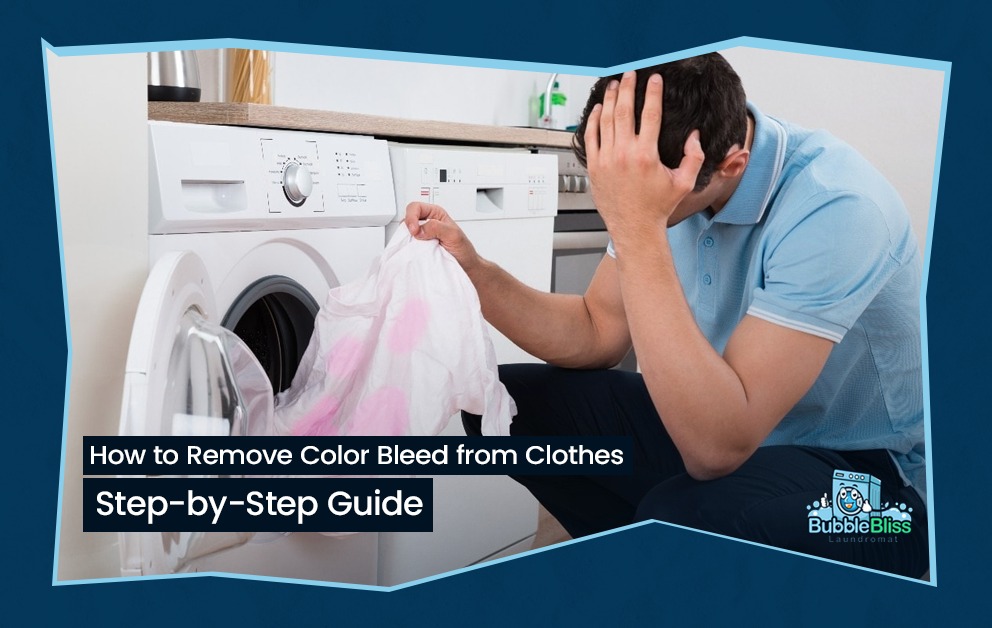
Nobody plans for white socks to come out baby pink or gray sweaters to develop purple patches. The reality is that color transfer happens even to careful washers, especially with new clothes. Learning how to remove color bleed from clothes means you’re prepared when accidents happen.
What Is Color Bleeding and Why Does It Happen?
Color bleeding happens when dye from one fabric leaks onto another during the wash cycle. The main culprits behind dye bleeding include hot water, which opens up fabric fibers and releases excess dye, mixing dark and light colors together in the same load, or washing brand new items that haven’t been pre-washed yet.
These laundry mishaps are super common, especially with vibrant reds, blues, and blacks that tend to have more unstable dyes. Even fabrics labeled as colorfast can sometimes transfer color under certain conditions. Once you understand why color transfer occurs, fixing it becomes way less intimidating.
Step 1: Act Quickly (Why Timing Matters)
Speed is everything when dealing with a fresh color stain on your clothes. The longer that transferred dye sits on the fabric, the deeper it penetrates into the fibers, making removal significantly harder. Prompt action can be the difference between a quick fix and a permanent stain that follows your favorite shirt forever.
As soon as you notice the color bleed, separate the affected items from the rest of your laundry. Avoid letting them dry or sit in a pile, since both heat and time work against you here.
Step 2: Rinse the Affected Area With Cold Water
The first physical step to rinse color bleed involves running cold water through the stained area from the back of the fabric. This technique pushes the dye out through the surface it entered from, rather than driving it deeper into the material. A cold water rinse is crucial because hot or warm water will actually set the stain permanently into the fibers.
Hold the stained section under a running faucet or use a spray bottle if you’re treating a larger garment. Keep rinsing until the water runs clear, which might take a few minutes depending on how much dye transferred. This simple step removes a surprising amount of excess color before you even use any cleaning products.
Step 3: Use a Stain Remover or Vinegar Solution
After the initial rinse, it’s time for some serious stain remover application to tackle what’s left behind. You can grab a commercial stain remover from any store, or make a DIY solution at home using one cup of white vinegar mixed with two cups of water. Vinegar for stains works incredibly well because it helps break down dye molecules without damaging most fabric types.
Apply your chosen solution directly to the stained areas, making sure to saturate them completely. Gently work the solution into the fabric using your fingers or a soft brush, then let it sit for about 10-15 minutes. This gives the cleaning agents time to penetrate and lift the transferred color from the fibers.
Step 4: Soak the Garment (For Stubborn Stains)
Sometimes a quick treatment isn’t enough, especially with darker dyes or larger affected areas. That’s when you need to soak stain out properly using a basin or sink filled with cold water. Following smart laundry soaking tips means adding either your vinegar solution or a color-safe oxygen bleach to the water before submerging the garment. Let the item soak for 30 minutes to one hour, checking periodically to see if the stain is lifting.
For really stubborn cases, you can extend the soak time up to several hours or even overnight. Just remember to use cold water throughout the entire process to prevent setting the stain further.
Step 5: Wash the Clothes With Color-Safe Detergent
Once you’ve pre-treated and soaked the affected garments, it’s time for a proper wash cycle. Using a color-safe detergent protects the original colors of your clothes while still cleaning out the transferred dye. Set your washing machine to a gentle wash cycle with cold water; never hot or warm for this particular situation. Add the recommended amount of detergent, possibly a bit extra if you’re dealing with multiple stained items.
Skip the fabric softener for this wash since it can sometimes seal in remaining dye particles. Running the cycle on a longer wash setting gives the detergent more time to work its magic on those persistent color transfers.
Step 6: Inspect the Stain Before Drying
This step is absolutely critical. Always do a thorough stain check before throwing your clothes in the dryer or hanging them in direct sunlight. Heat from the dryer will permanently set any remaining dye into the fabric, making it nearly impossible to remove later. Pull out each item individually, examine it in good lighting, and look for any traces of the color bleed.
Even faint shadows of the stain mean you need to repeat the treatment process. Proper fabric care means taking the time to verify your efforts worked before moving forward. If the stain is completely gone, you can safely dry the garment as usual.
Step 7: How to Fix Persistent Stains (After First Wash)
Some set-in stains refuse to budge even after following all the previous steps perfectly. When you need to rewash stain that survived the first treatment, it’s time to bring out stronger solutions. Try soaking the garment in an OxiClean solution mixed according to package directions, or use a commercial color remover product designed specifically for dye transfer.
These products are more aggressive than regular detergents, so test them on a hidden area first to make sure they won’t damage the fabric. Repeat the soak-and-wash process, possibly multiple times for really stubborn stains. Patience pays off here, sometimes the third or fourth treatment finally does the trick.
How to Prevent Color Bleeding in the Future
Learning how to remove color bleed from clothes is great, but preventing it from happening saves you tons of time and frustration. The easiest way to prevent color bleeding is washing new clothes separately for the first few washes, since that’s when they release the most excess dye. These essential laundry care tips also include sorting your loads by color intensity, like, lights with lights, darks with darks, and keeping super vibrant items isolated.
Toss a few color catcher sheets into mixed loads as an extra safety net. Always wash in cold water unless the care label specifically requires warm or hot. Taking these simple precautions means you’ll deal with way fewer color transfer emergencies going forward.
When to Use Professional Laundry Services for Color Bleeding
Sometimes the DIY approach just isn’t cutting it, especially with vintage items that need special handling. That’s when professional stain removal becomes the smarter choice than risking further damage at home. If you’re in NYC dealing with stubborn color bleeds on valuable clothing, laundry services NYC like Bubblebliss Laundromat have the expertise and industrial-grade equipment to handle tough cases. We use specialized techniques and professional-grade products that aren’t available to regular consumers. For silk, wool, leather, or any garment with a “dry clean only” label, professional help is basically mandatory. The investment in expert care often costs less than replacing a ruined item.
FAQs About Color Bleed Removal
- Does vinegar really work for removing color bleed?
Yes, white vinegar is surprisingly effective at breaking down dye molecules. The acetic acid in vinegar helps lift transferred color without bleaching or damaging most fabrics. Just remember to dilute it properly and always rinse thoroughly after treatment.
- How do I remove red dye from white clothes?
Red dye is notoriously stubborn, so act fast. Follow the cold water rinse method immediately, then use an oxygen bleach soak for at least an hour. You might need to repeat the process several times. For white fabrics specifically, you can use a slightly stronger bleach solution than you would on colored items.
- Can color bleed be fixed after the clothes have already dried?
It’s definitely harder once the stain has been heat-set, though not always impossible. You’ll need more intensive treatments like commercial dye removers or professional services. The success rate drops significantly compared to treating fresh stains, so catching it early really matters.
Wrapping Up
Dealing with color-bled clothes doesn’t have to mean saying goodbye to your favorite pieces. Following these steps on how to remove color bleed from clothes gives you solid odds of restoring your garments to their original condition.
For those times when home remedies aren’t enough or you’re dealing with delicate fabrics, Bubblebliss Laundromat offers professional stain removal services with convenient laundry pickup right here in NYC. Schedule a pickup today and let our experts handle those stubborn stains while you get back to living your life.